Get to Know Trees
Tree Identification Interactive
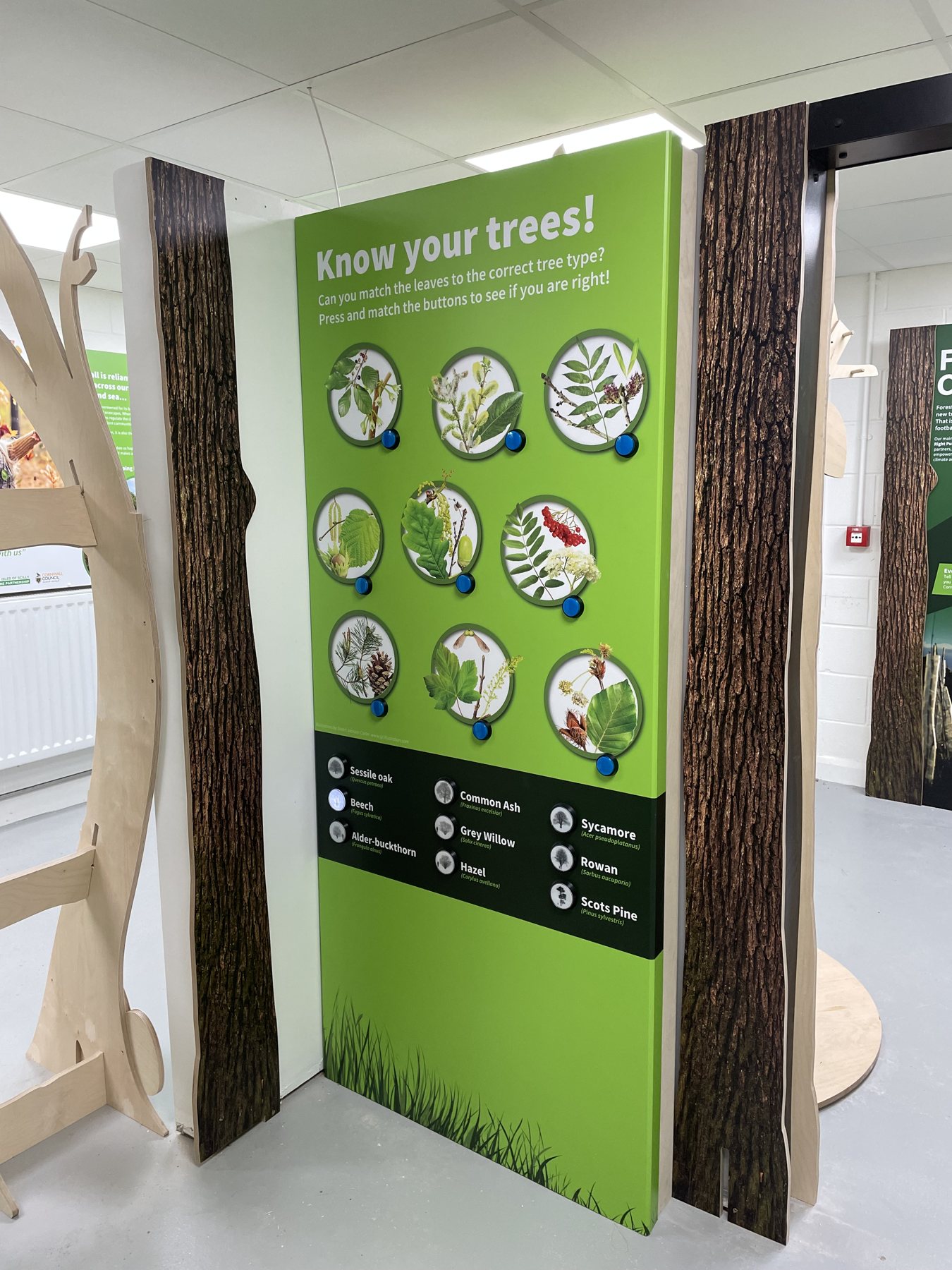
Match a tree to its leaf pattern using a simple button-based activity. This nature interpretation panel encourages visitors to compare shapes and connect familiar leaves with tree names.
The display presents a selection of leaf illustrations and named trees. Visitors use the buttons to make their choices, moving between visual observation and identification as they work through the activity.
Printed graphics and physical controls keep the interaction closely connected to the subject. The result is a compact environmental education exhibit that can sit within a wider interpretation wall or nature-themed visitor display.
Explore the interactive
Tree identification begins with noticing differences. Placing the illustrated leaves, tree names and selection buttons in one panel encourages visitors to look closely before making a choice. The activity can prompt discussion about the features used to recognise a tree and how those features vary, turning a nature interpretation panel into something visitors actively work through.
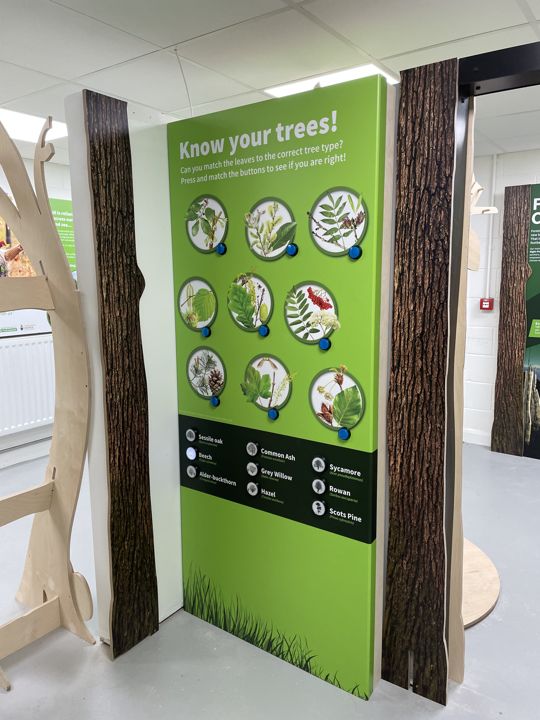
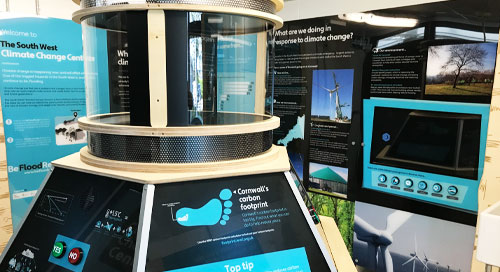
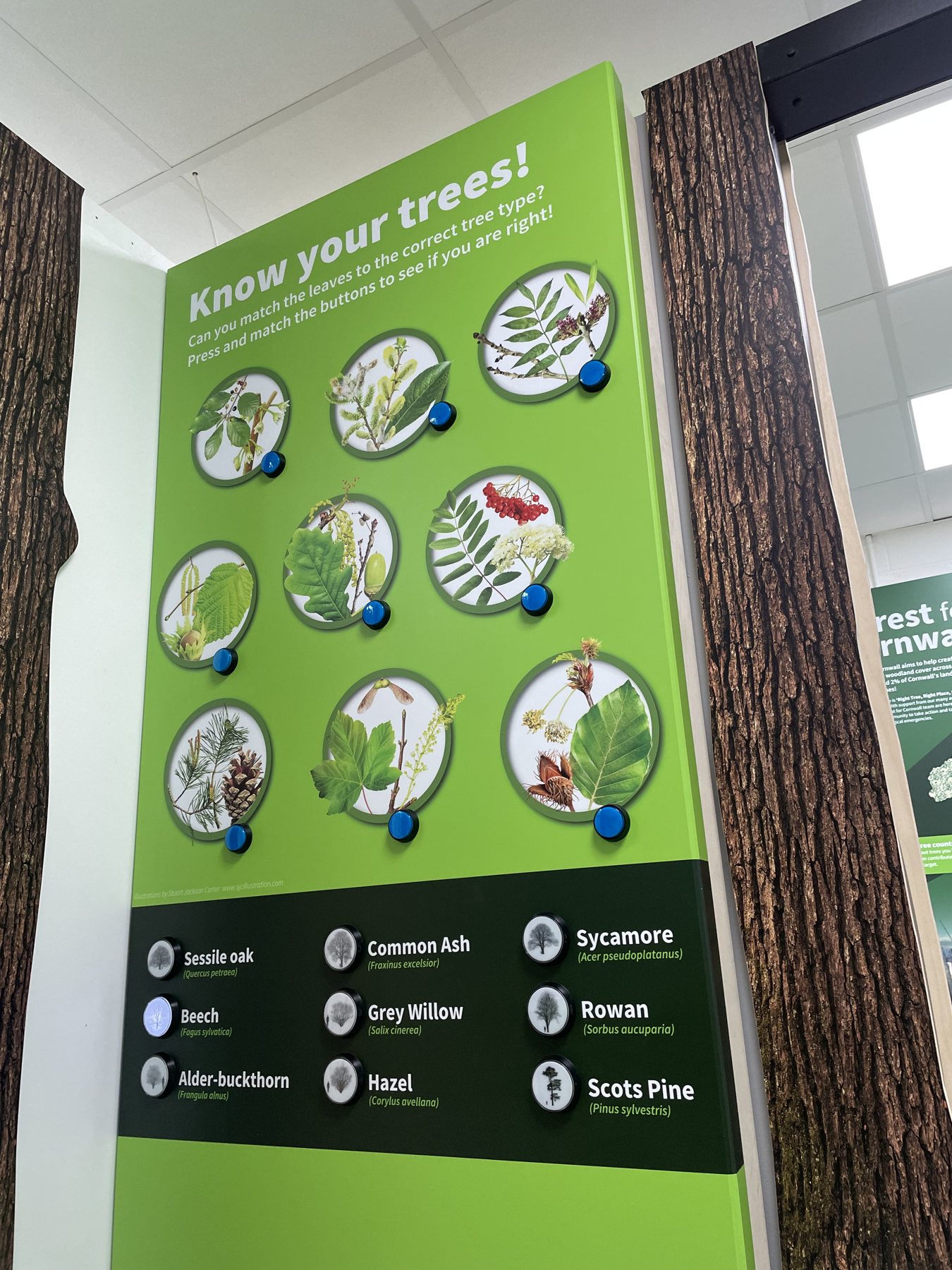
The complete tree identification panel. This compact nature interpretation exhibit brings leaf illustrations and physical buttons together to encourage observation and tree identification.
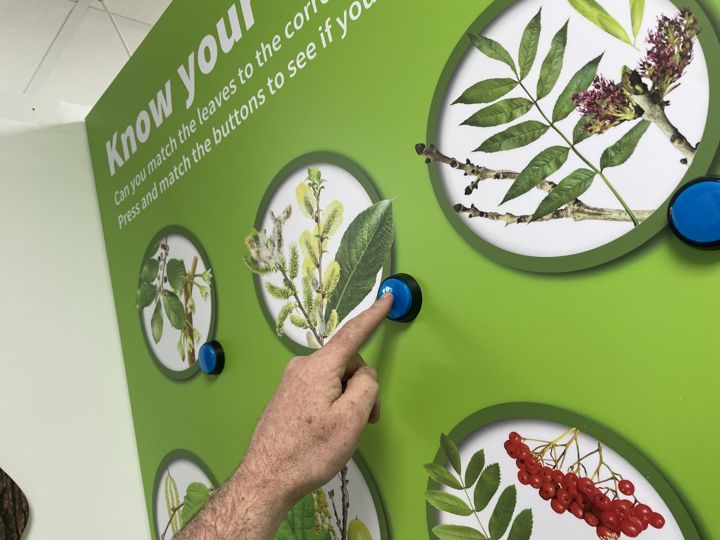
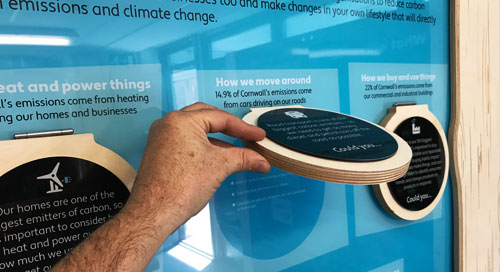
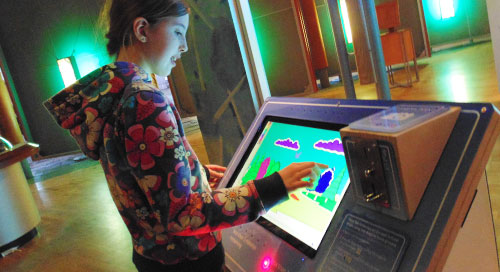
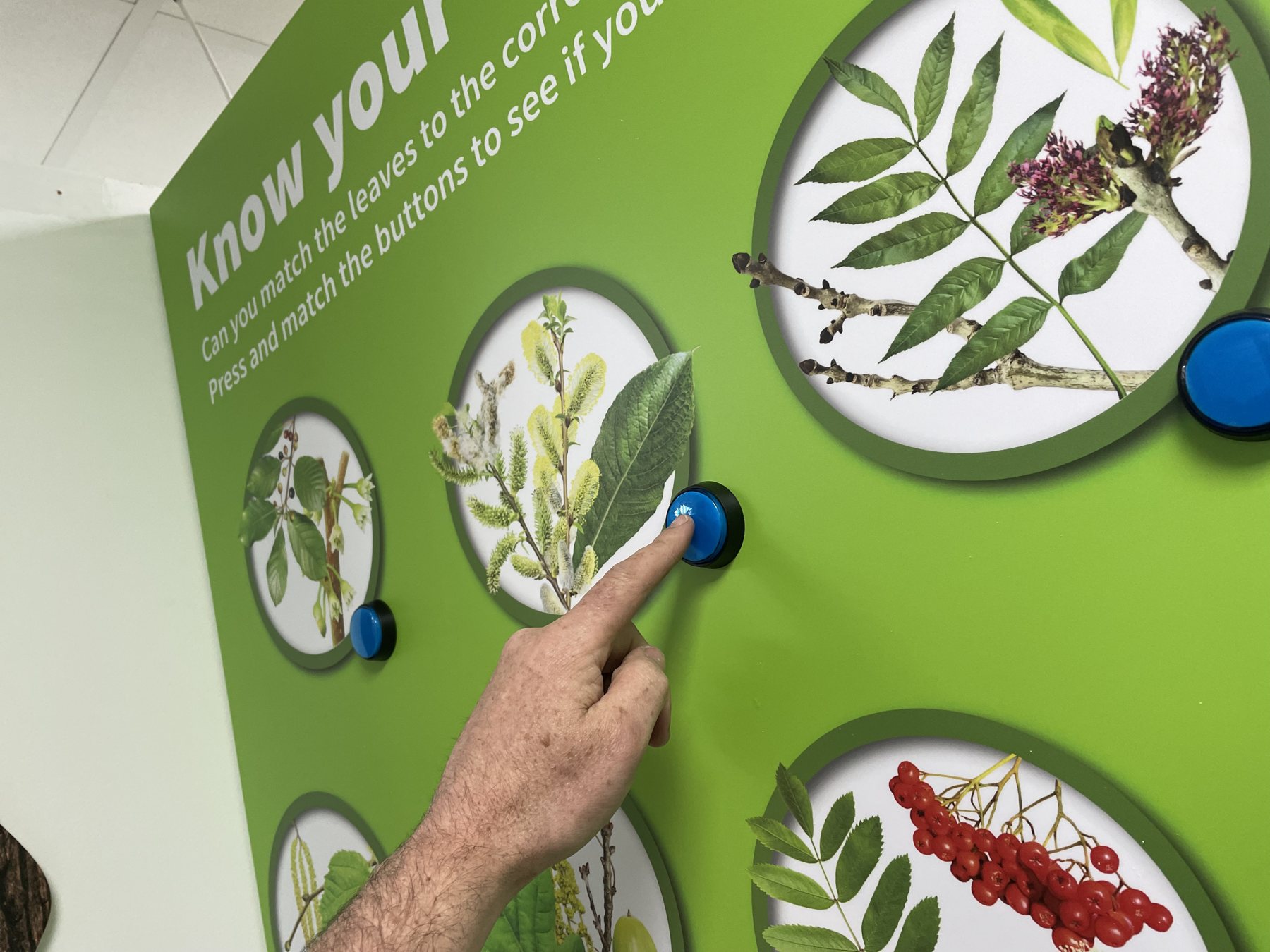
A visitor selecting one of the leaf illustrations. Making a selection turns looking at leaf shapes into an active task, giving visitors a practical starting point for environmental learning.
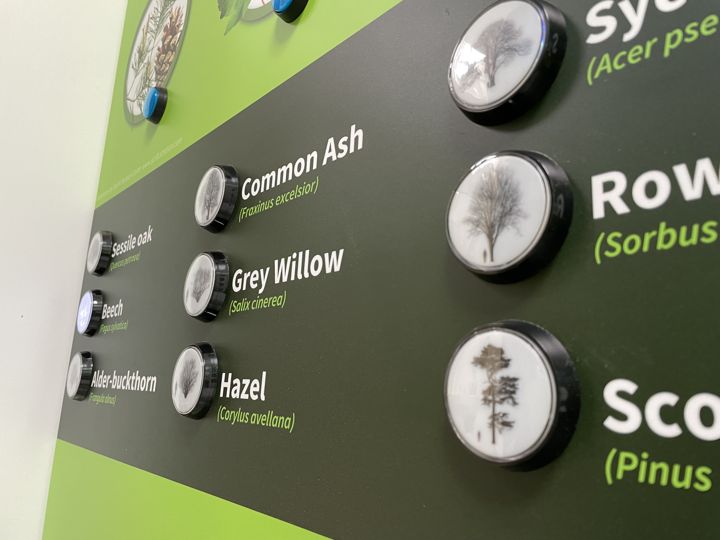
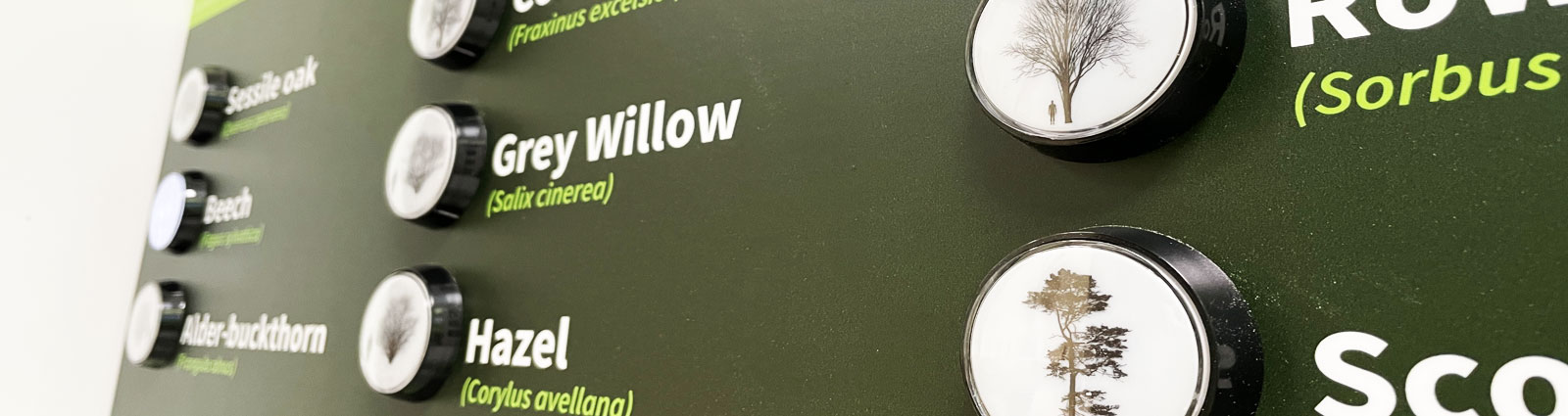
Tree names and physical selection buttons. Clear labels connect the visual examples with tree names, keeping the button-based activity closely tied to the identification subject.
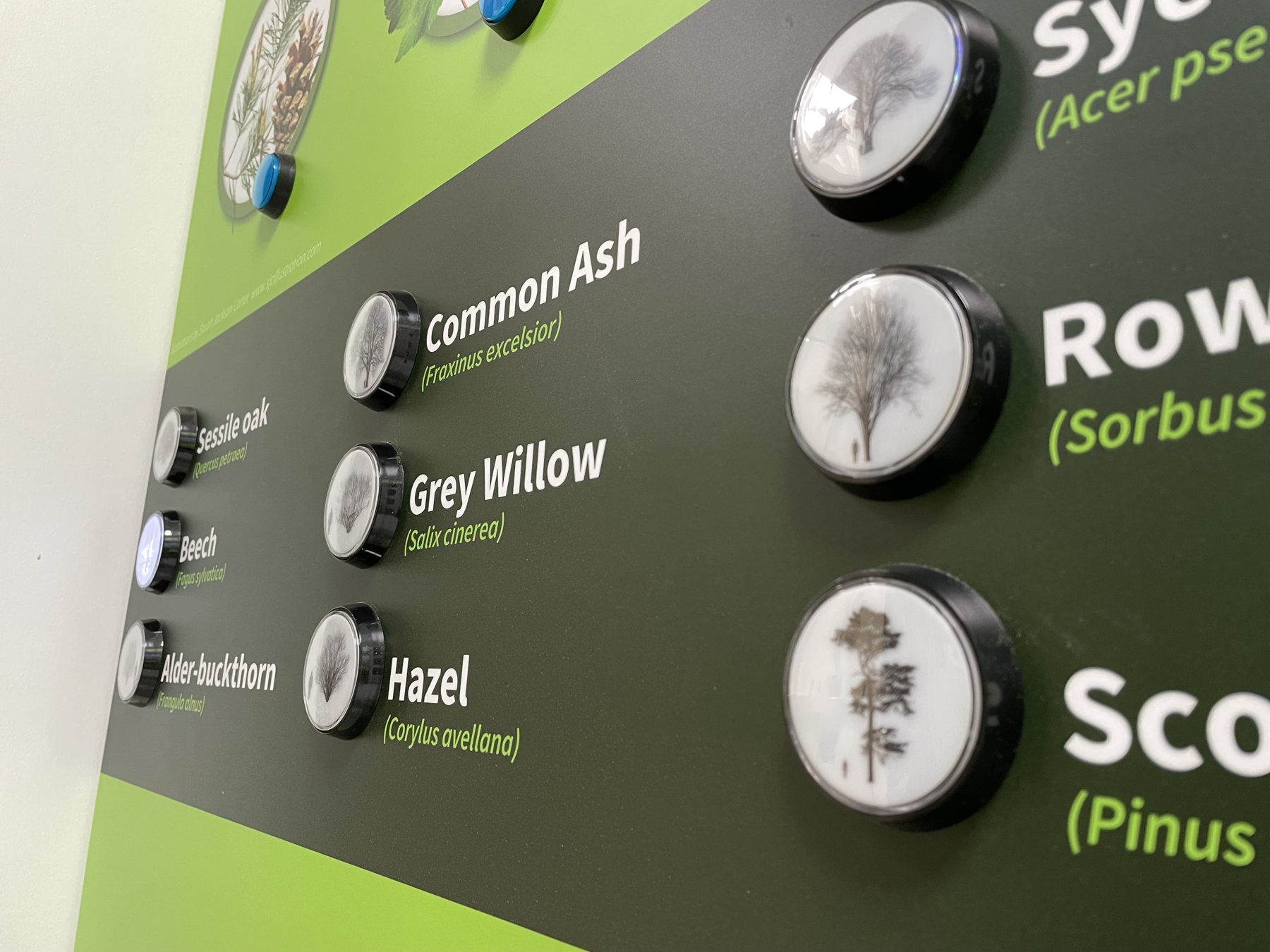
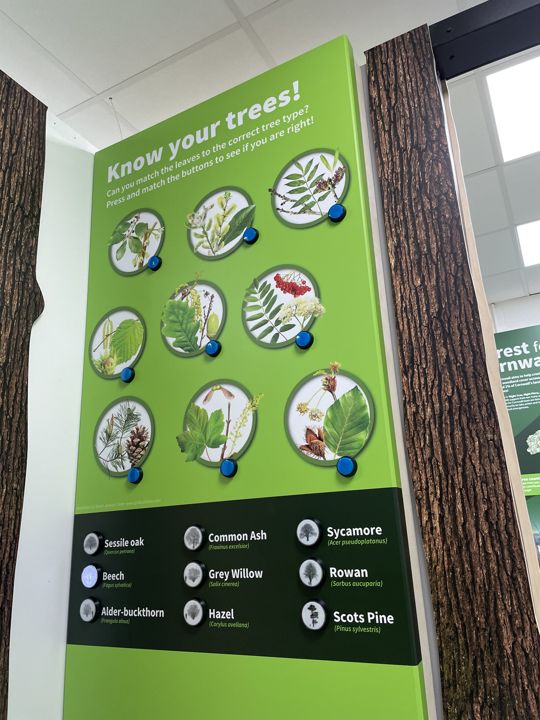
A closer view of the leaf illustrations and controls. The coordinated graphics and controls create a hands-on museum panel that can sit within a wider woodland or nature-themed display.
Back to Interactives
Develop the right interactive approach for you...
We begin with your story, audience, space and objectives. You don’t need to arrive with a finished brief. We test mechanisms, controls and user interactions and deliver the completed experience.