Discover Coastal Signals
Coastal Lighthouse Interactive
Explore the coastline through the distinctive flashes of its lighthouses. Visitors press a button to locate a lighthouse and see a pulse pattern matching the signal used to identify it.
The exhibit links each selected coastal location to its flashing light sequence. That connection gives visitors a way to compare lighthouse signals and understand why a light’s timing matters as well as its position.
The purpose-built display combines a coastal map, physical controls and illuminated feedback. It is an example of heritage interpretation that translates a real-world identification system into a simple museum activity.
Explore the interactive
The lighthouse display makes a pattern of flashes something visitors can select, observe and compare. Linking the signal to a position on the map helps join two pieces of information that might otherwise be read separately. This combination of graphic interpretation, simple controls and timed lighting is particularly useful for explaining a system whose meaning depends on both location and sequence.
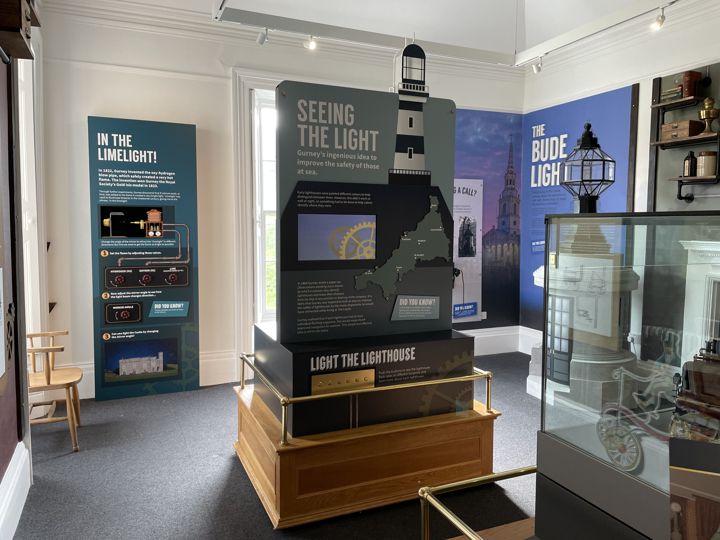
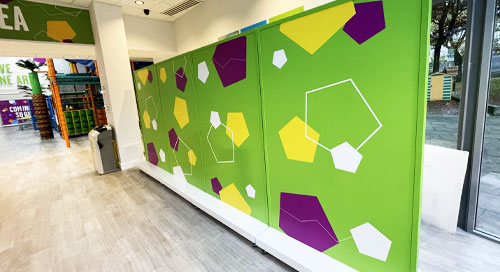
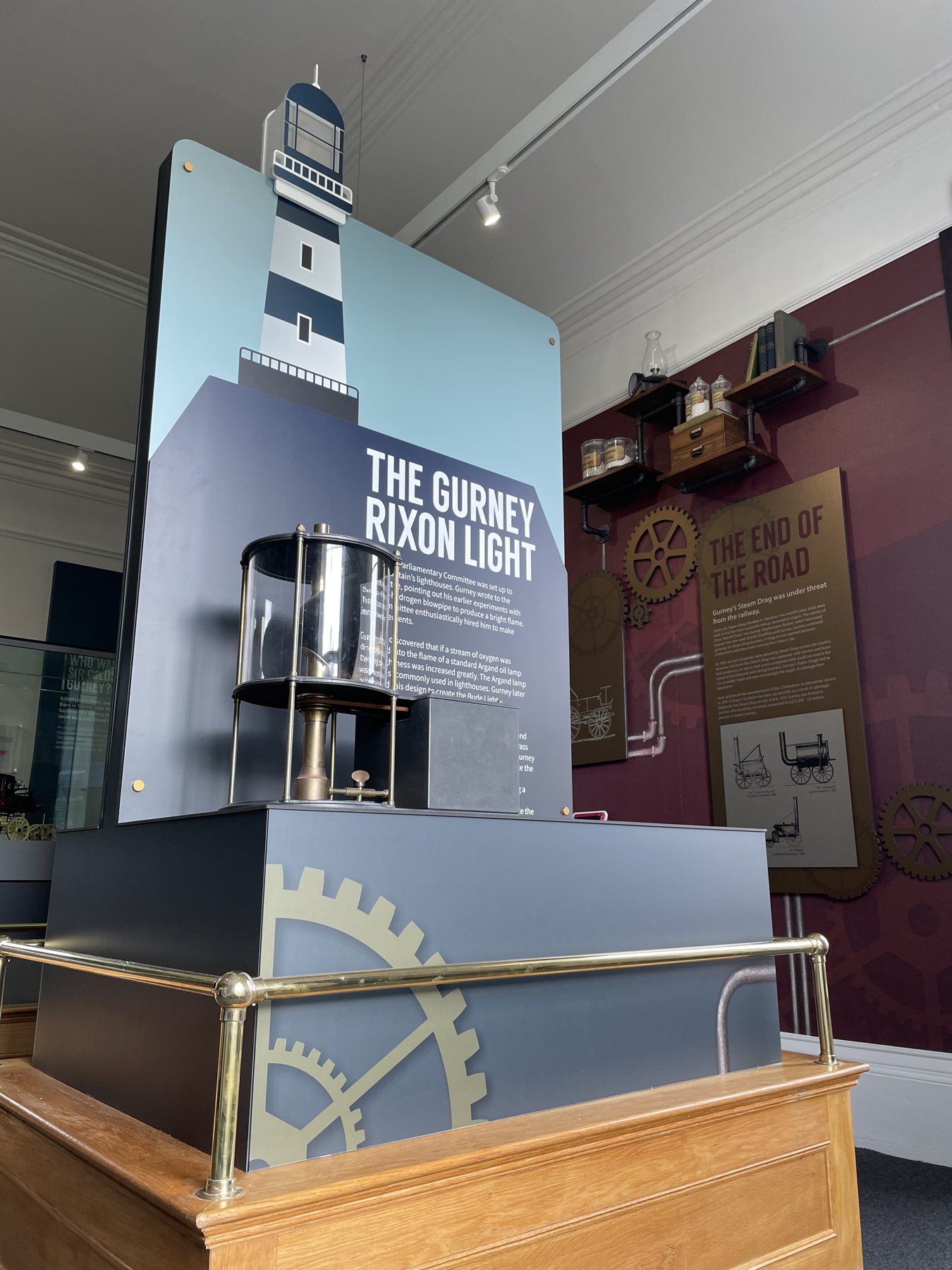
The completed lighthouse exhibit installed beside other heritage displays. The bespoke heritage display introduces lighthouse identification through a coastal map, visitor-operated buttons and distinctive flashing light patterns.
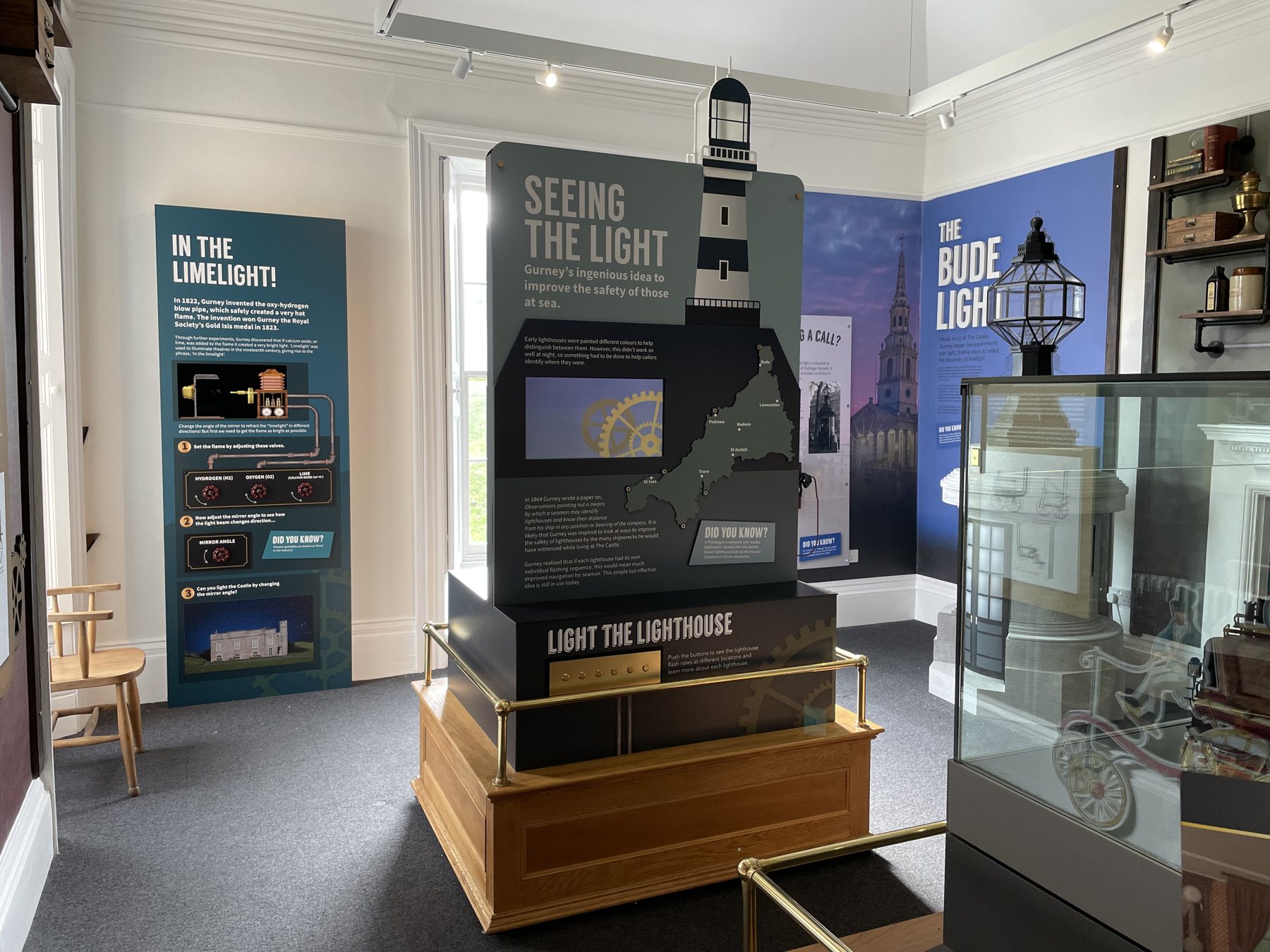
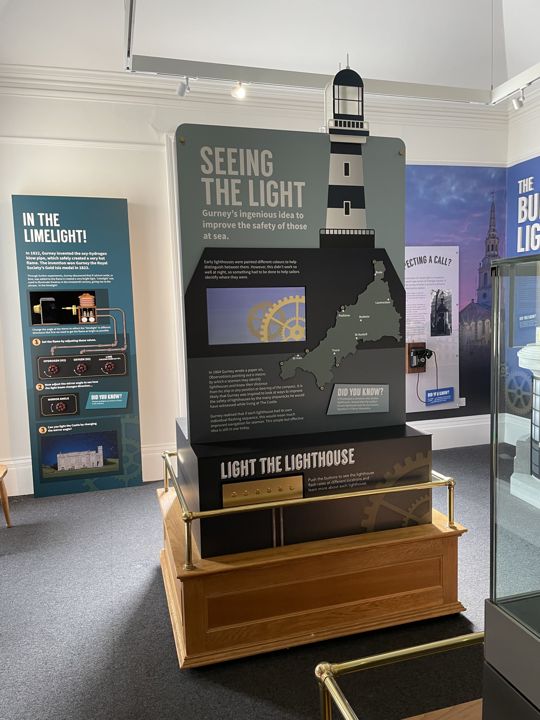
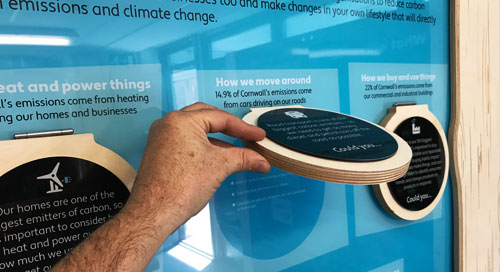
Front view of the coastal interpretation unit. Visitors select a location and compare its signal, turning coastal interpretation into a simple activity about the importance of timing and position.
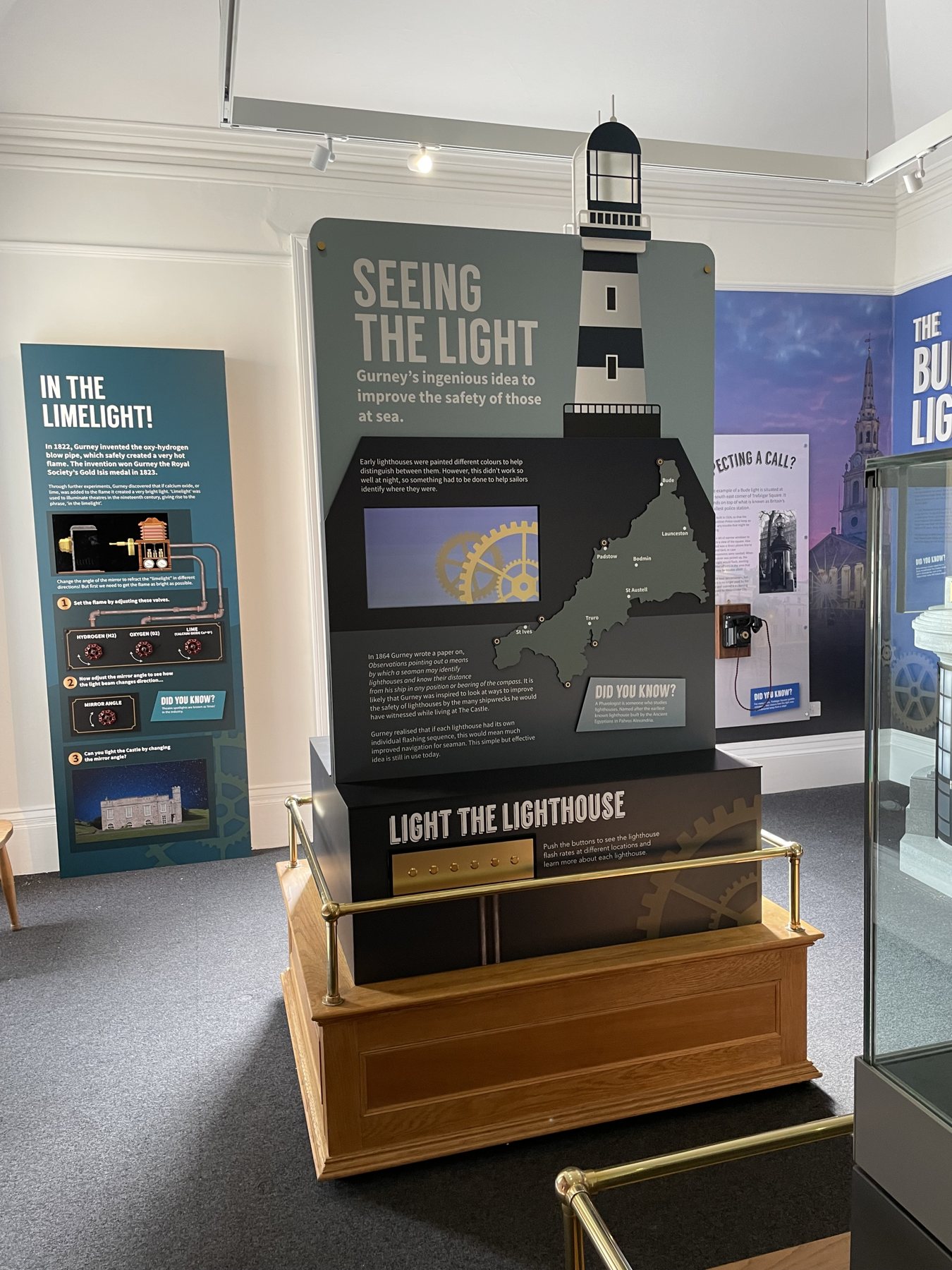
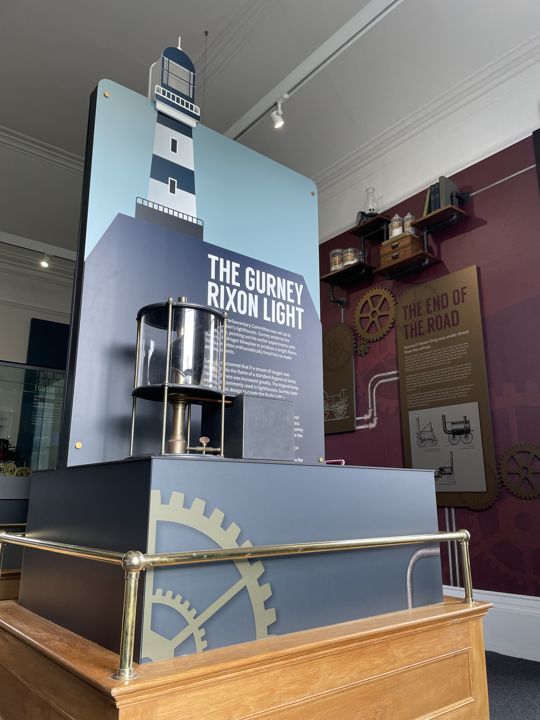
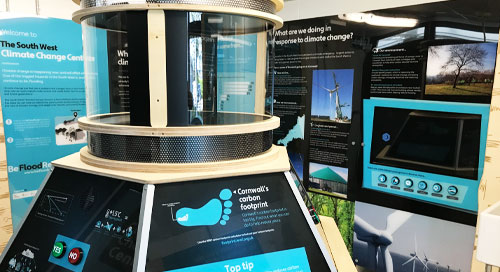
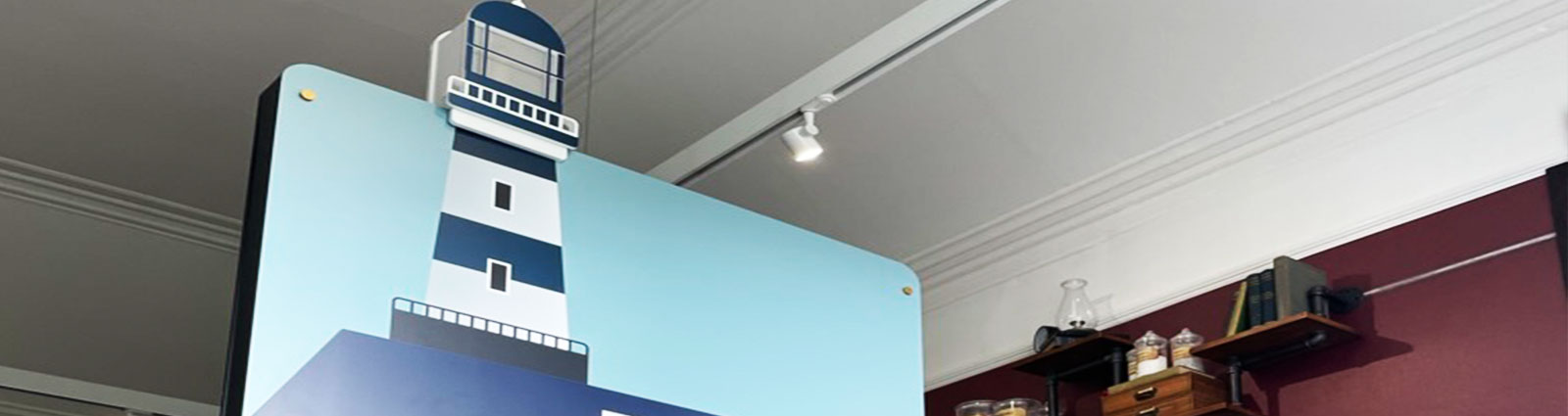
The lighthouse-themed structure and map display. The themed structure gives the map and illuminated feedback a shared setting, keeping the lighthouse story closely connected to the physical exhibit.
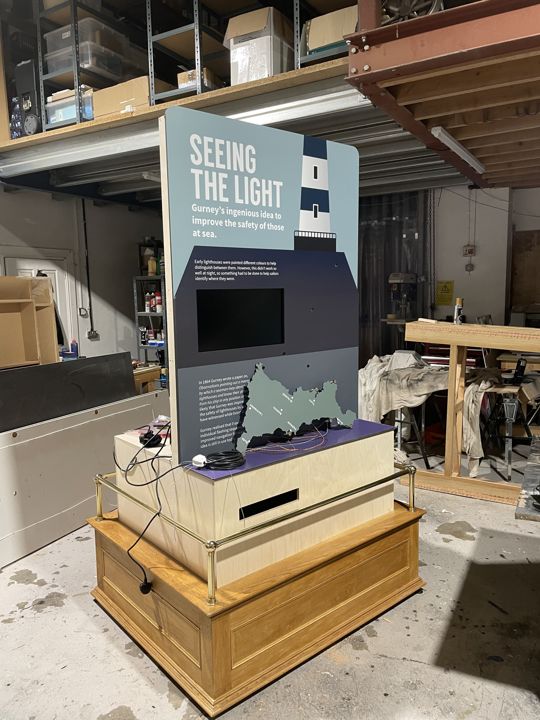
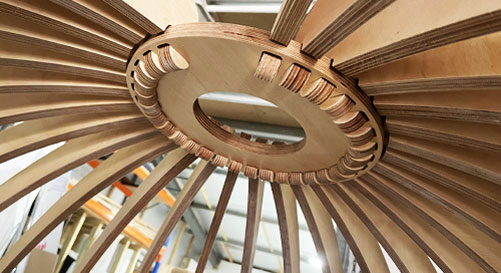
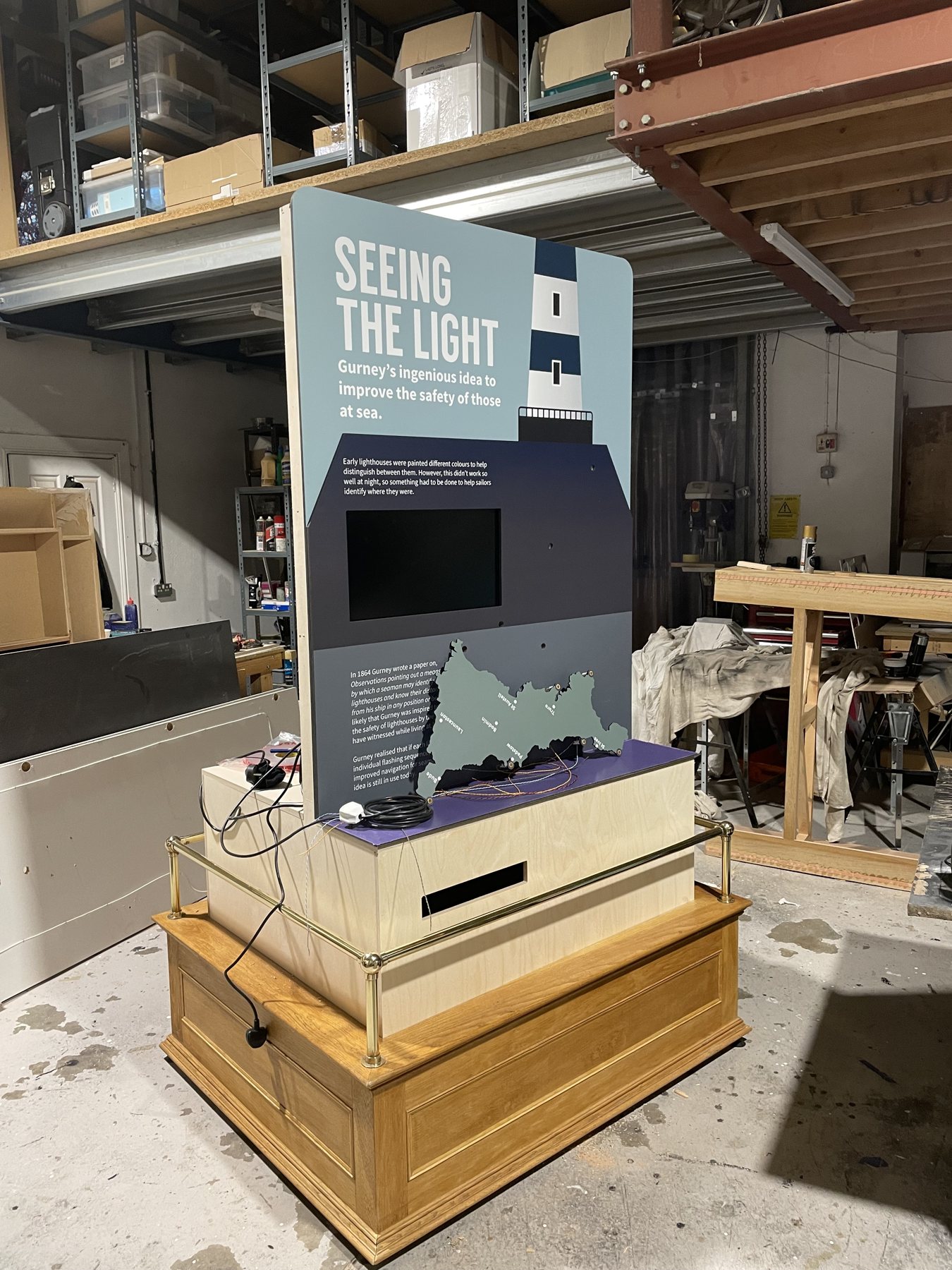
The exhibit during workshop assembly. Custom fabrication brings the structure, graphics and lighting together before installation as an interactive museum interpretation display.
Back to Interactives
Develop the right interactive approach for you...
We begin with your story, audience, space and objectives. You don’t need to arrive with a finished brief. We test mechanisms, controls and user interactions and deliver the completed experience.