Bringing Limelight to Life
Gurney Limelight Interactive
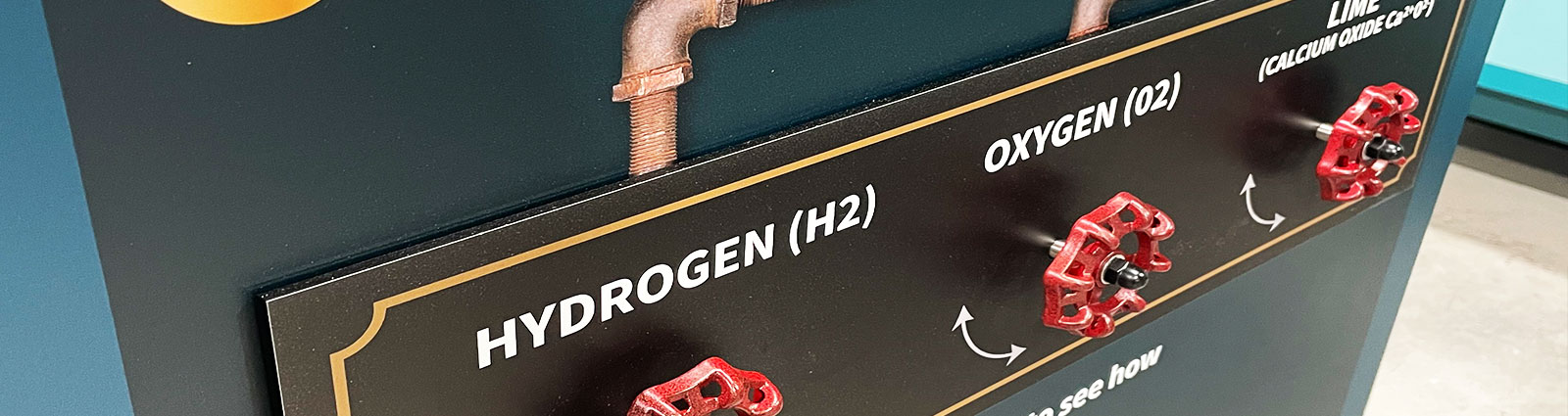
Turn the traditional-style taps and explore the effect of changing a flame. This museum interactive uses screens and digital inputs to explain Gurney’s limelight through a controlled audiovisual simulation.
The visitor adjusts the represented flow of oxygen and hydrogen, changing the on-screen flame before introducing lime to produce a bright effect. The controls connect a physical action to the video sequence, making the historical process easier to follow.
The flame footage was recorded by our in-house team. Multiple audiovisual screens and tap-operated digital inputs are built into the interpretation unit, combining a period-inspired control method with modern playback technology.
Explore the interactive
The tap controls give the limelight story a tactile connection to the historical equipment. Visitors adjust a physical input and see the represented effect on screen, bringing cause and effect into the explanation. Combining recorded footage with a purpose-built cabinet allows the process to be presented as an audiovisual museum experience, while the surrounding interpretation connects the activity to Gurney’s work.
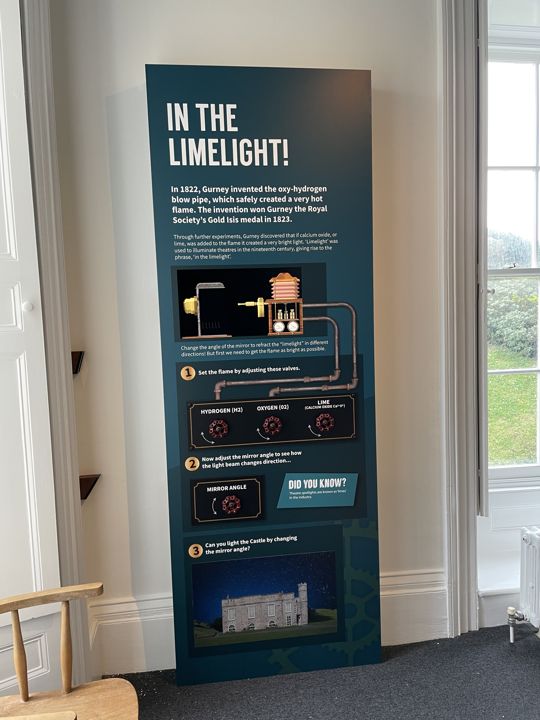
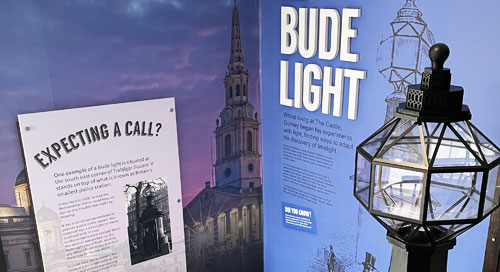
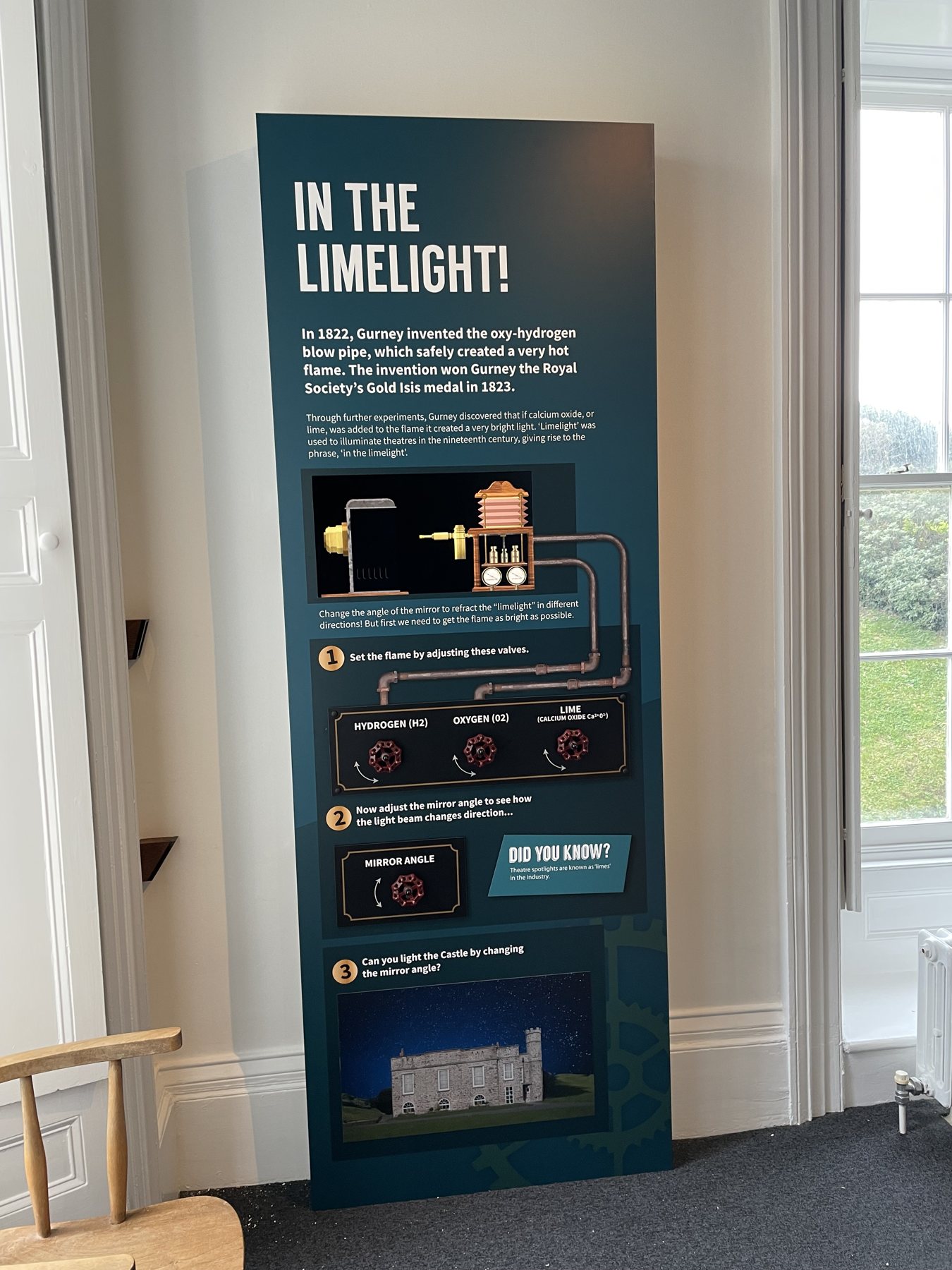
The completed limelight exhibit in its heritage setting. This bespoke museum exhibit explains Gurney’s limelight with physical controls and recorded flame sequences, presenting the process through an audiovisual simulation.
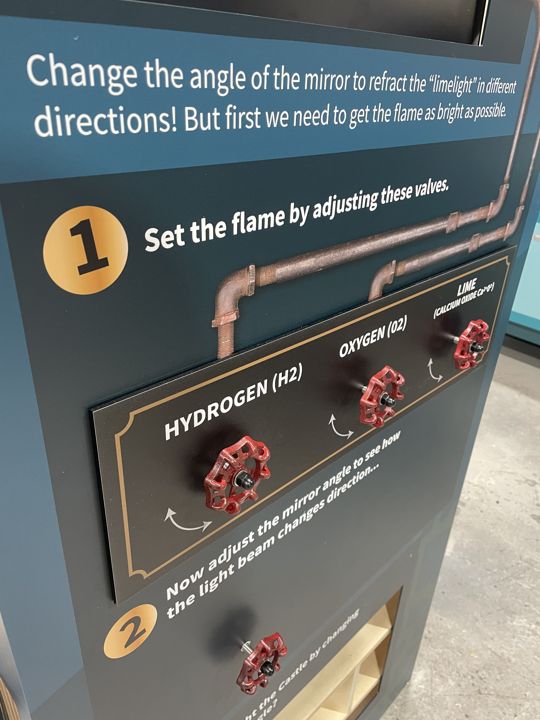
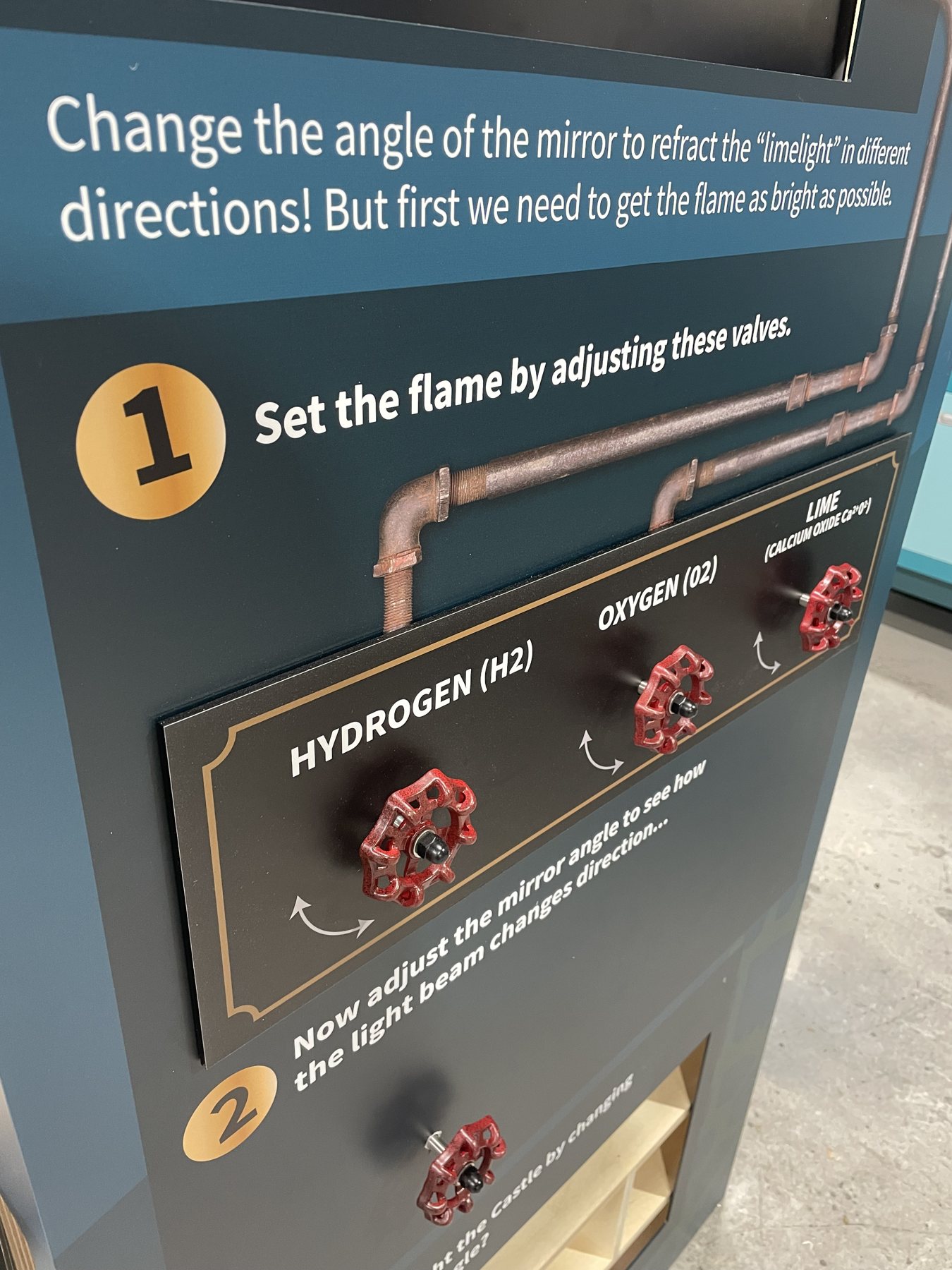
Traditional-style taps used as digital controls. The tap-operated inputs let visitors adjust the represented gas flow and follow the effect on screen, connecting a historical process with a familiar hand movement.
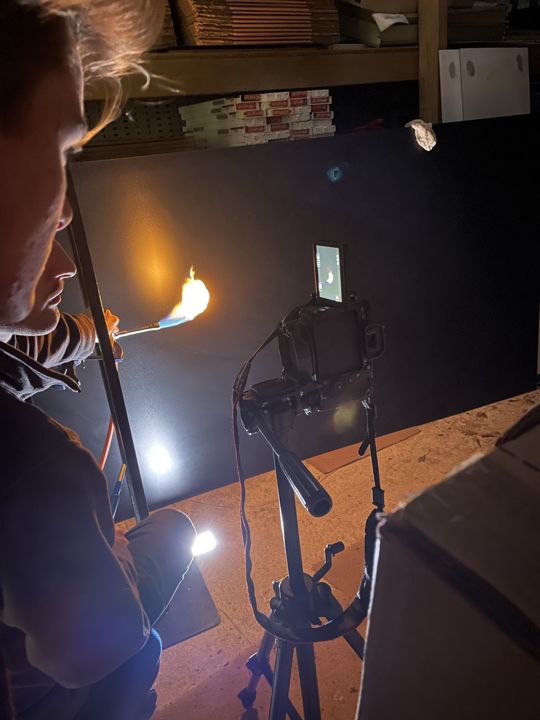
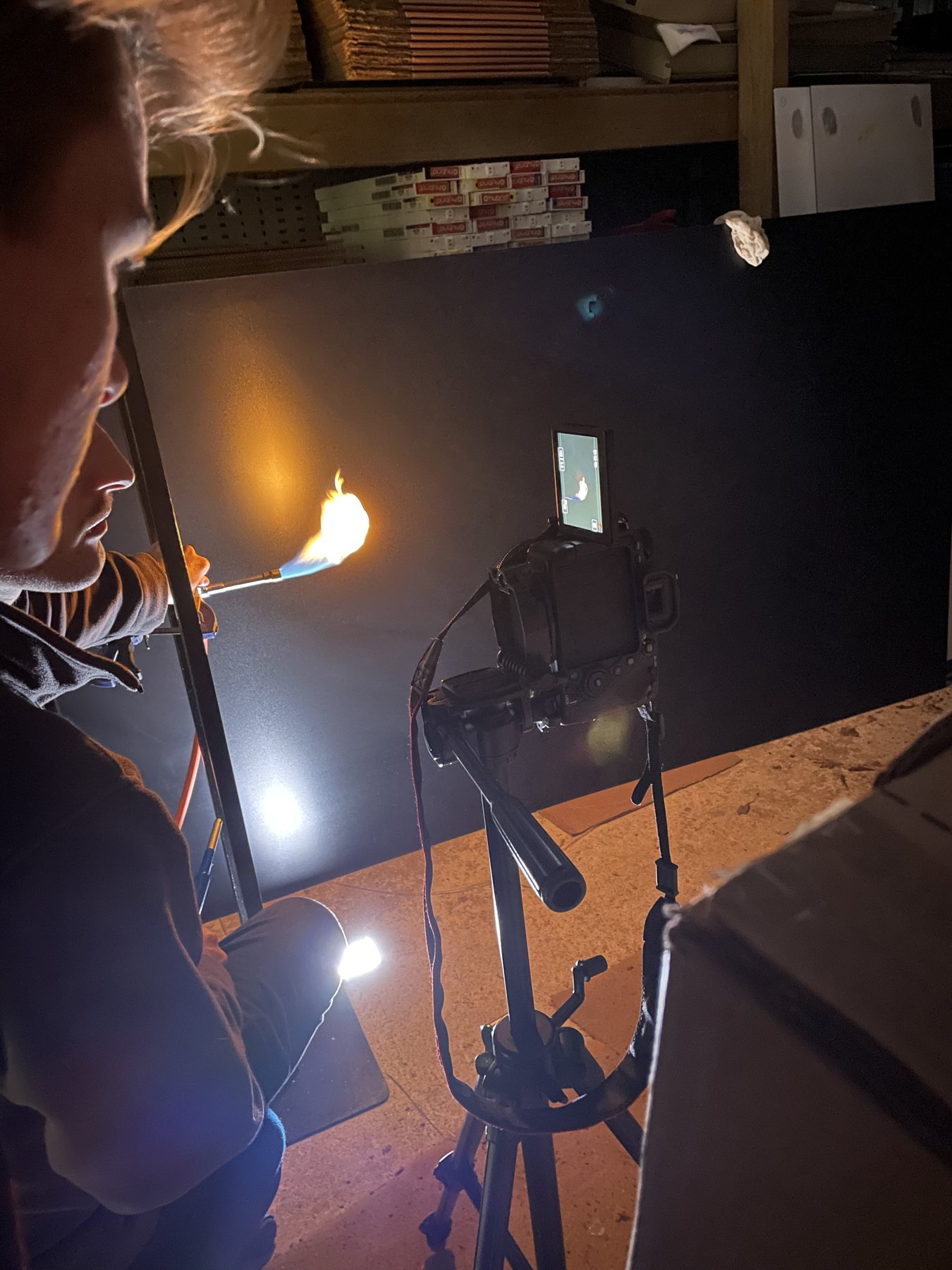
Flame footage being recorded for the exhibit. Our in-house footage supplies the visual material for the digital demonstration, linking content production with the design of the finished heritage display.
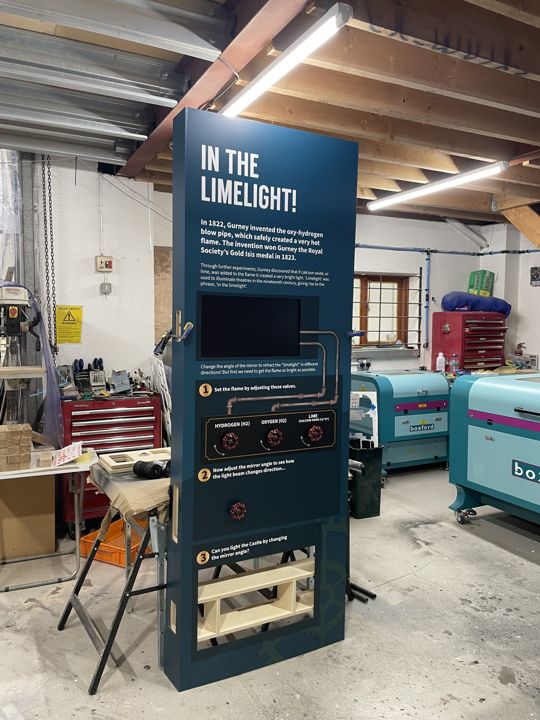
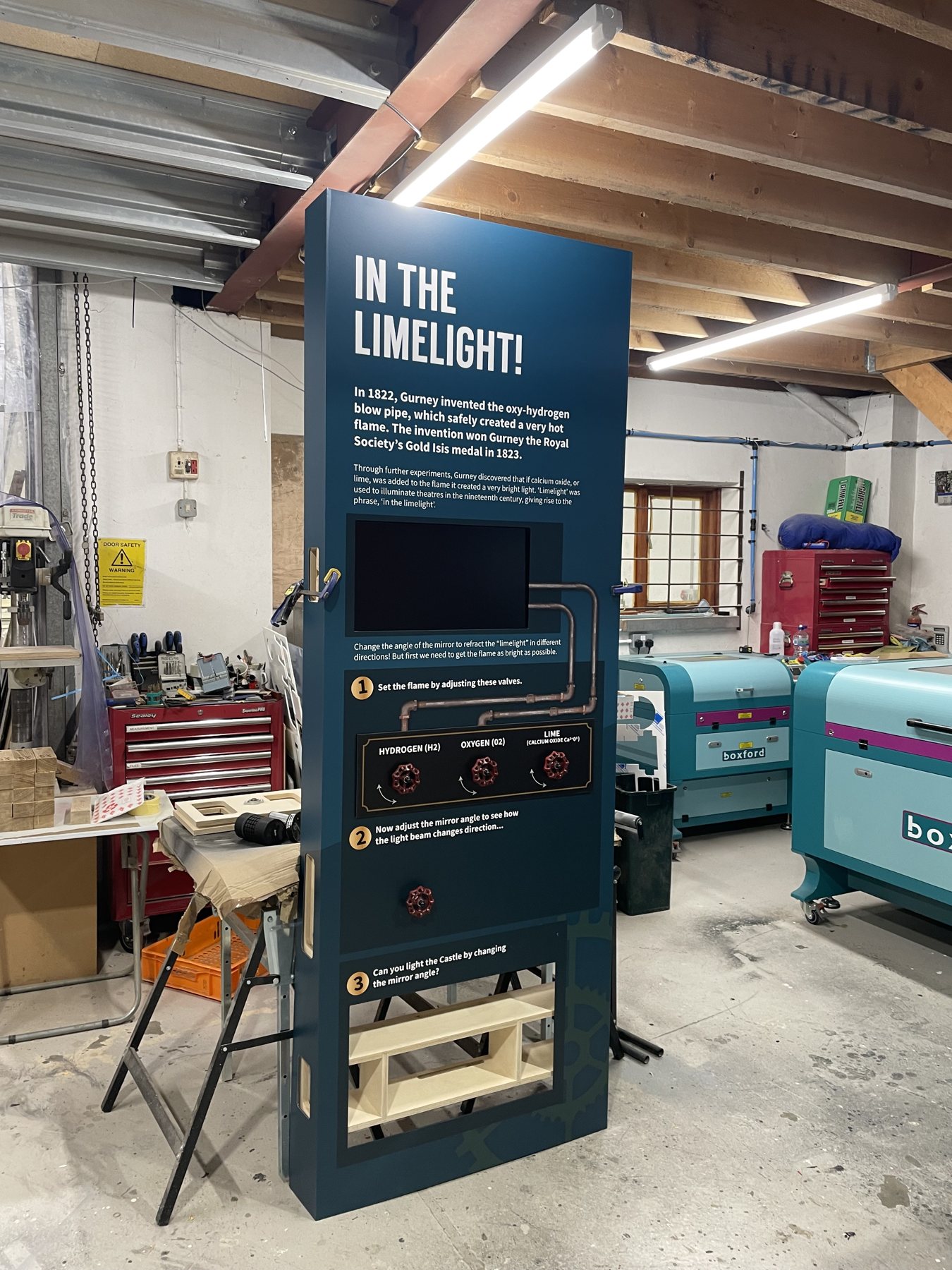
The interpretation unit during manufacture. The workshop build integrates the screens and visitor controls into a purpose-made interpretation unit, ready to present the limelight sequence.
Back to Interactives
Develop the right interactive approach for you...
We begin with your story, audience, space and objectives. You don’t need to arrive with a finished brief. We test mechanisms, controls and user interactions and deliver the completed experience.