Hands-on Engineering
JCB Digger Arm Interactive
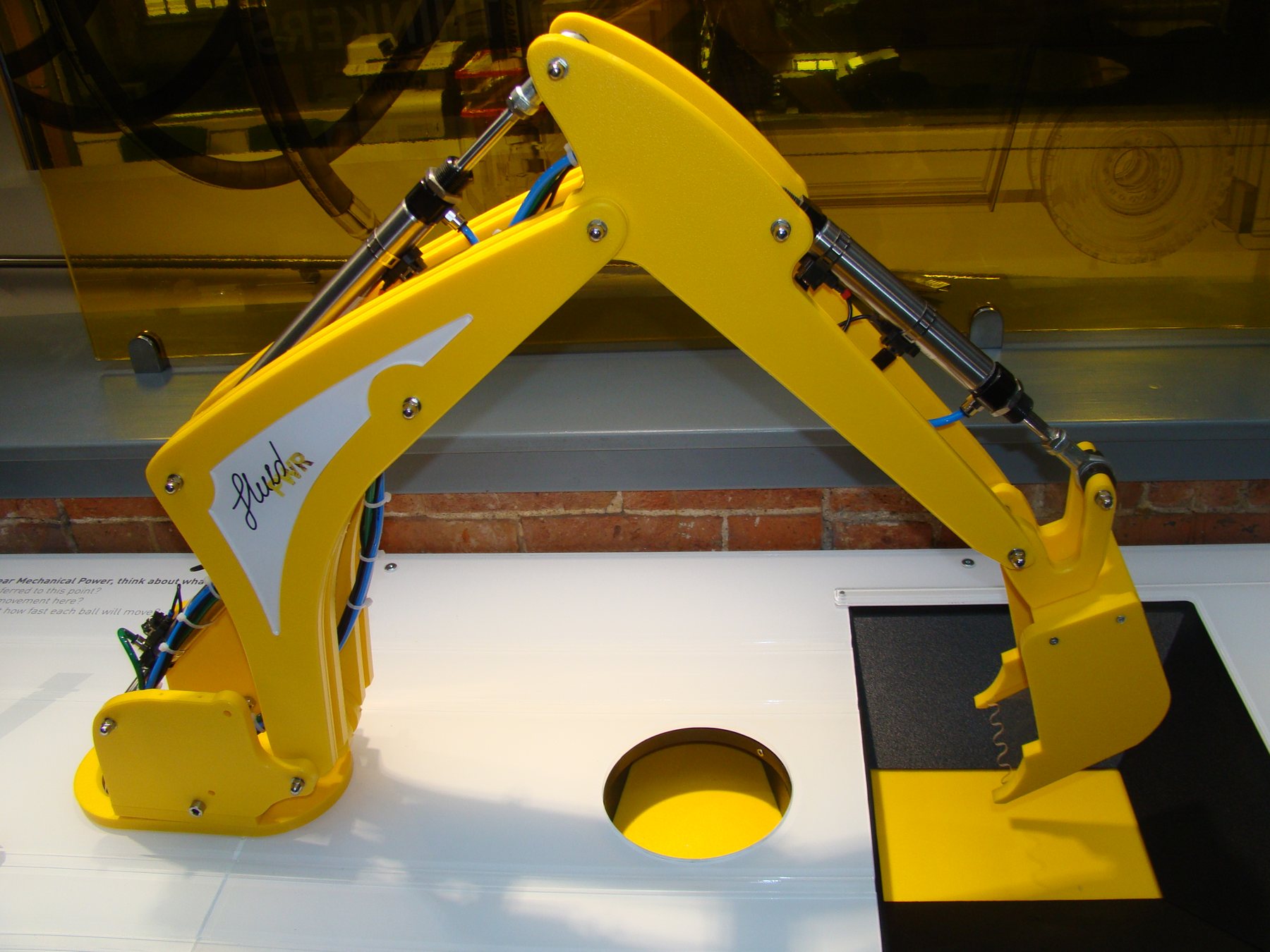
A joystick-controlled digger arm gives visitors a hands-on introduction to engineering. Produced for a JCB education facility, the pneumatic exhibit challenges users to pick up balls and place them in a box.
The joystick controls the arm’s movements so the visitor can position the bucket, collect a ball and move it to the target. The familiar shape of a digger gives the activity an immediate purpose while introducing the principles behind controlled mechanical movement.
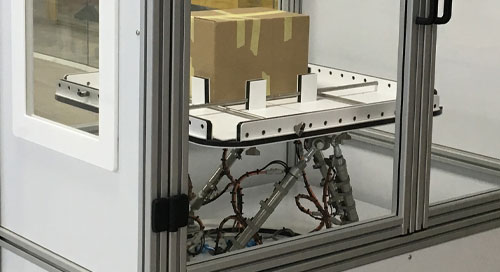
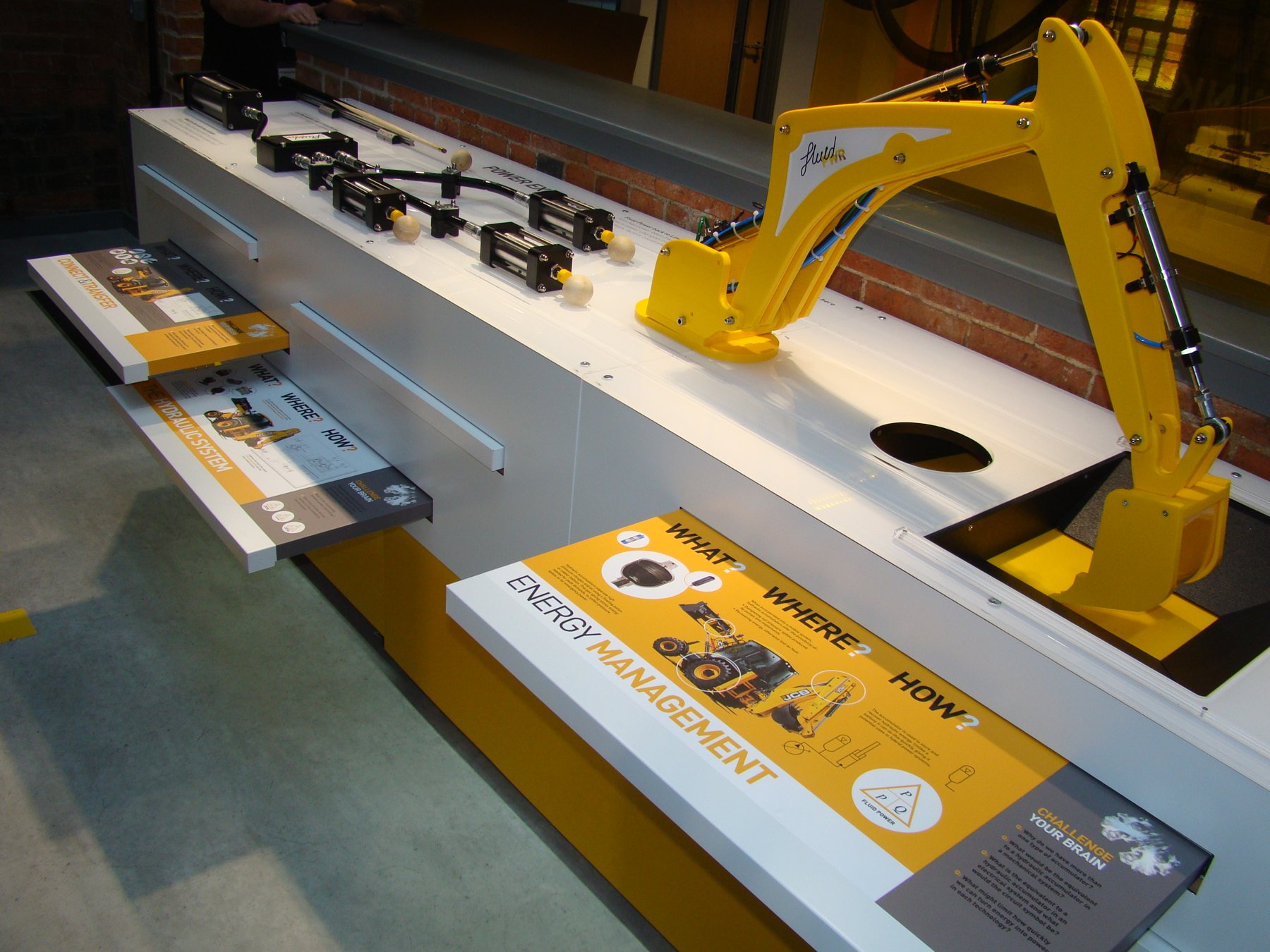
The working mechanism uses pneumatics, with the wider exhibit introducing hydraulic and pneumatic principles. A compact demonstration arm, visible connections and a purpose-built activity surface help bring an engineering lesson into a physical, repeatable task.
Explore the interactive
Picking up and placing a ball turns the digger’s movement into a clear visitor challenge. The task encourages attention to position, timing and the relationship between a control and a moving component. By presenting an engineering mechanism at a manageable scale, the exhibit gives the education team a physical example to refer to when discussing pneumatic and hydraulic systems. The photographs also show the fabrication work behind the finished activity.
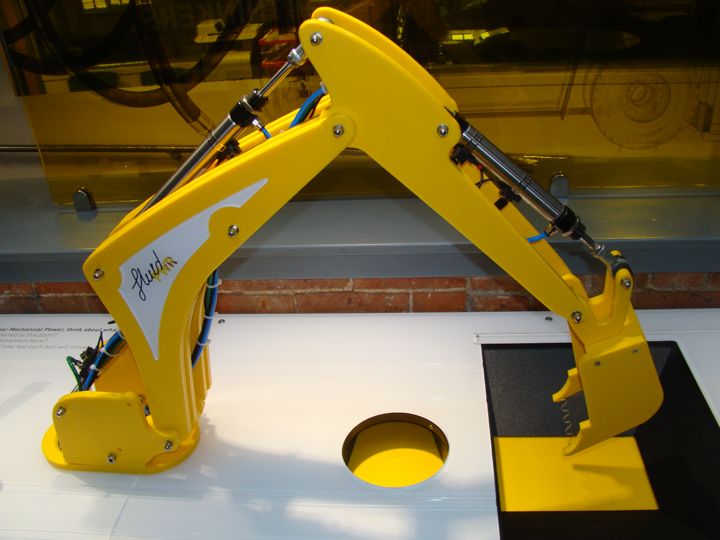
The demonstration digger arm above its activity surface. This pneumatic digger exhibit uses a familiar construction machine to introduce controlled movement through a hands-on engineering challenge.
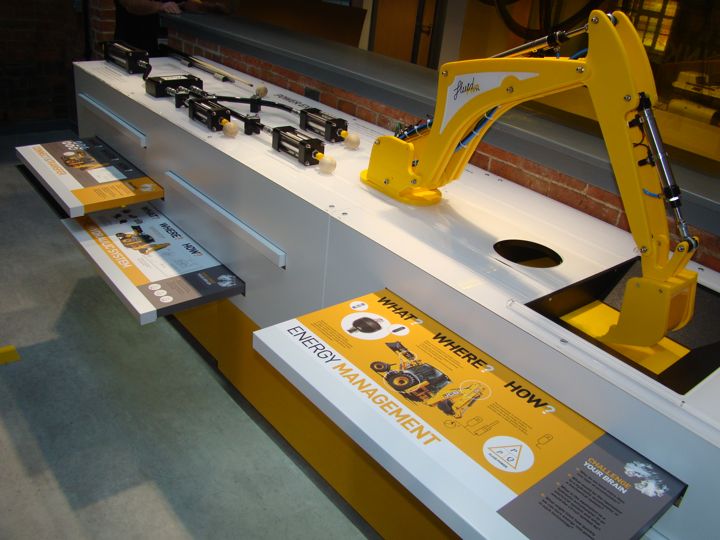
The completed engineering activity with its controls and target. Visitors use the joystick to collect and place balls, exploring how a sequence of small movements can complete a practical task.
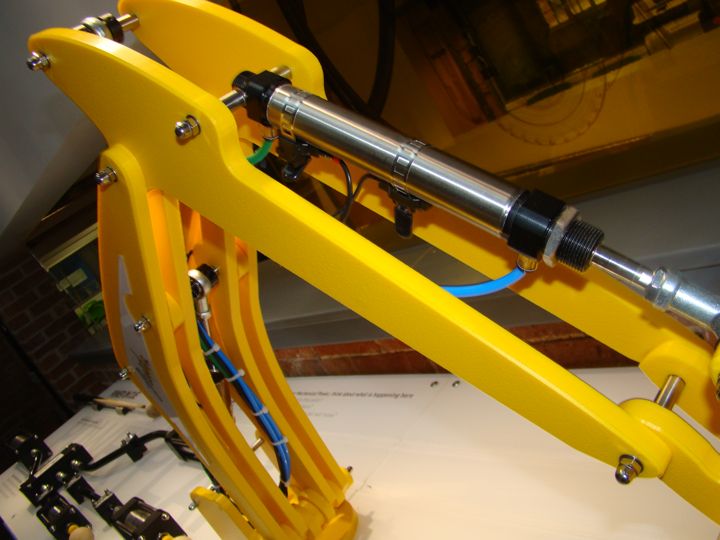
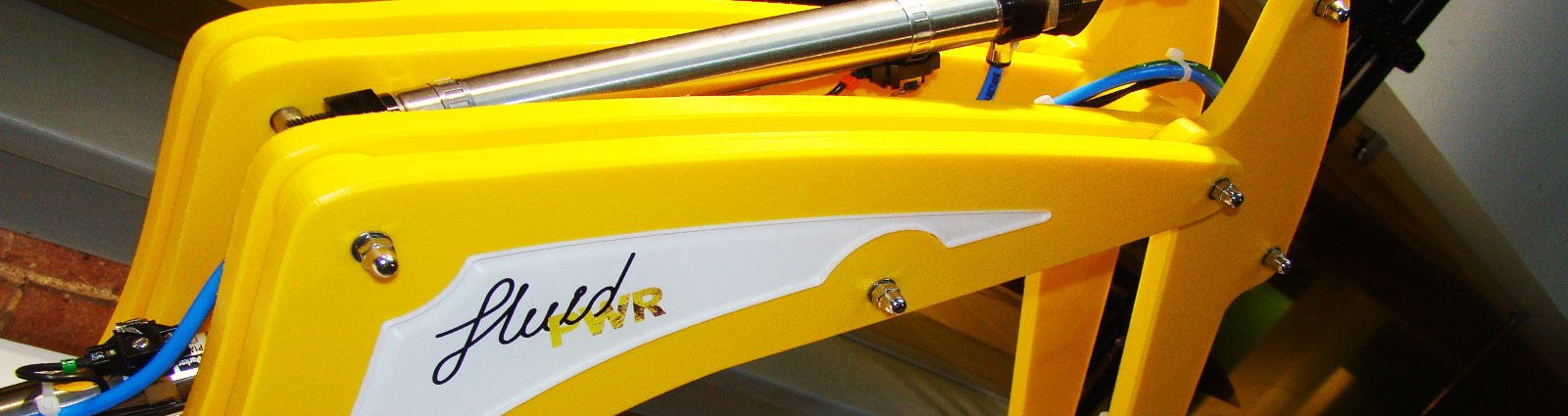
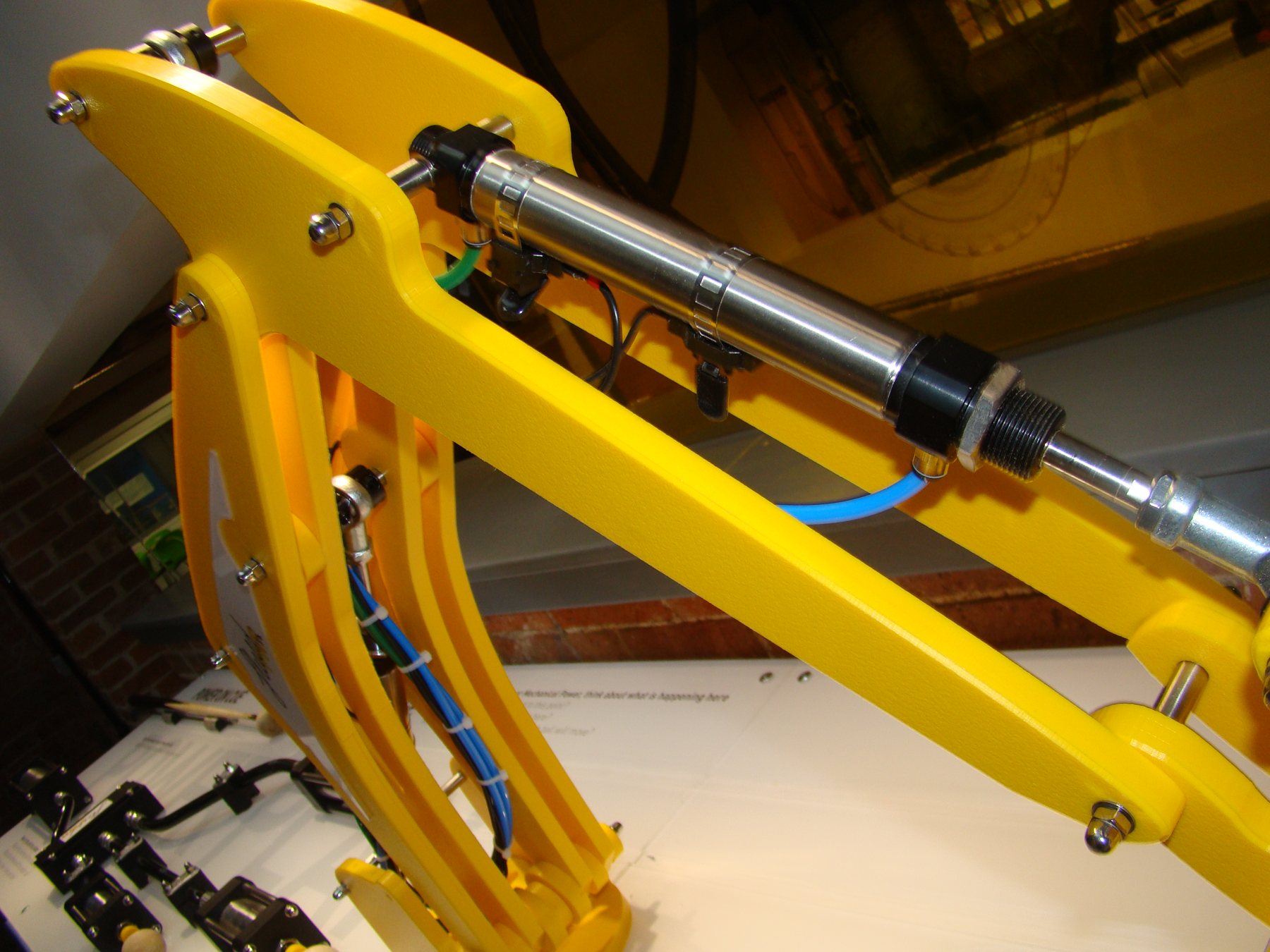
Close-up of the arm mechanism and pneumatic connections. The visible components help connect the arm’s movement with its pneumatic system, supporting the wider hydraulic and pneumatic education display.
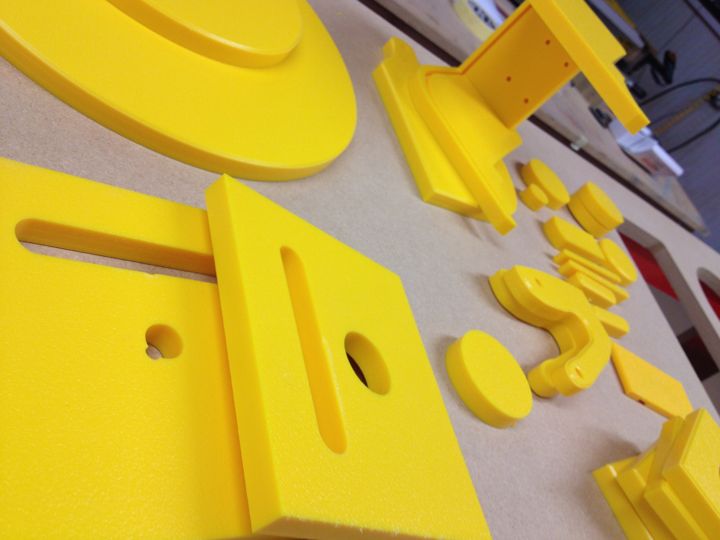
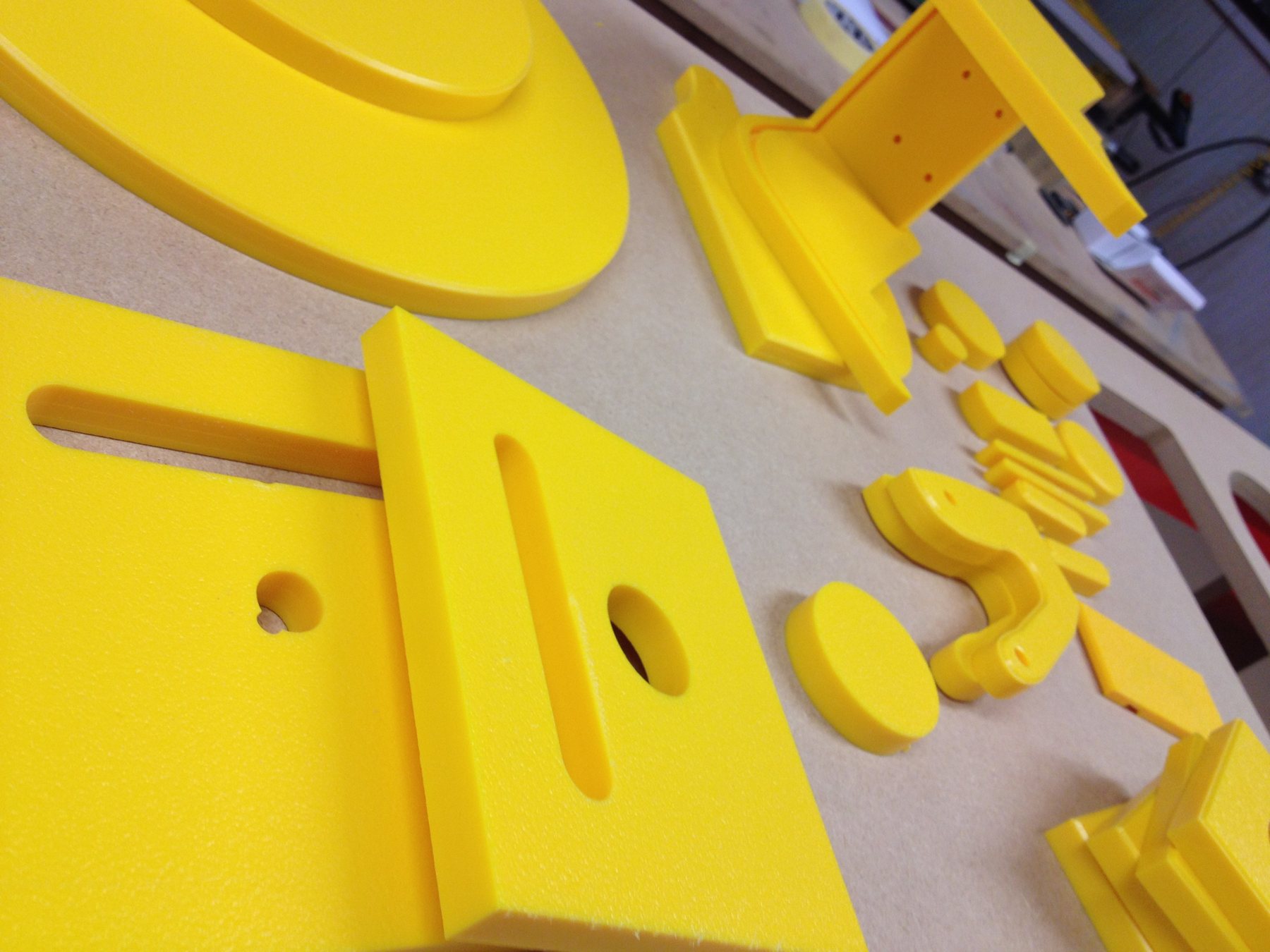
Painted components during manufacture. Workshop preparation brings the shaped and finished parts together before assembly into a bespoke interactive for the JCB education facility.
Back to Interactives
Develop the right interactive approach for you...
We begin with your story, audience, space and objectives. You don’t need to arrive with a finished brief. We test mechanisms, controls and user interactions and deliver the completed experience.