Discover Through Touch
Touch & Feel Interpretation Boxes
Invite visitors to investigate an object by touch before revealing what is inside. These interpretation boxes combine tactile discovery with a sliding top reveal and a short description of the item.
The boxes can be incorporated into interpretation walls and museum displays at a range of mounting heights. Visitors explore the concealed contents and then use the reveal to compare their impressions with the object and its description.
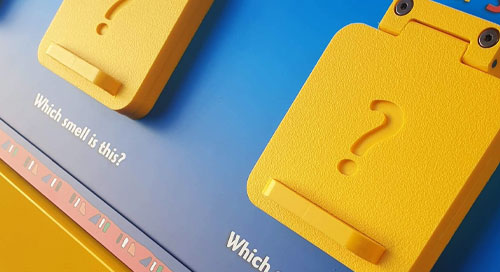
The range also includes replaceable scent pods, accessed through a sliding hatch. Colourful fronts and straightforward physical actions make the units useful building blocks for sensory interpretation, with the contents and surrounding graphics shaping the subject of each activity.
Explore the interactive
The reveal is an important part of the activity: visitors first form an impression through touch, then compare that impression with what they see. This simple sequence encourages observation and conversation without depending on a screen. Because the boxes sit within wider interpretation graphics, the objects, descriptions and surrounding subject can work together as one sensory museum display.
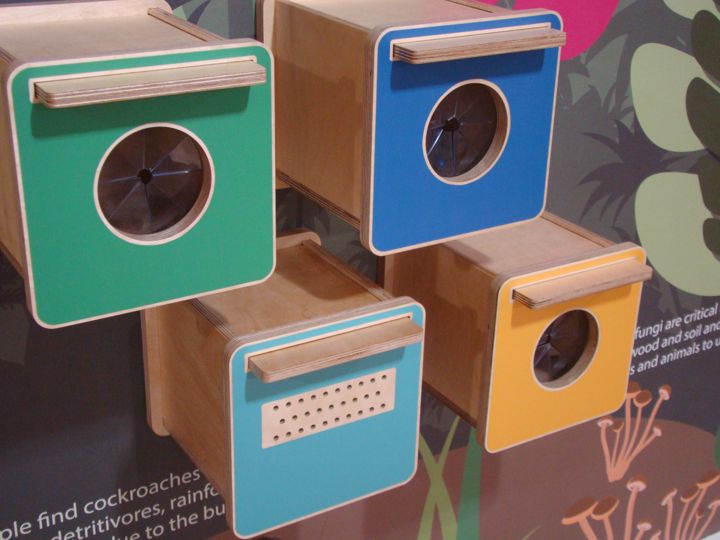
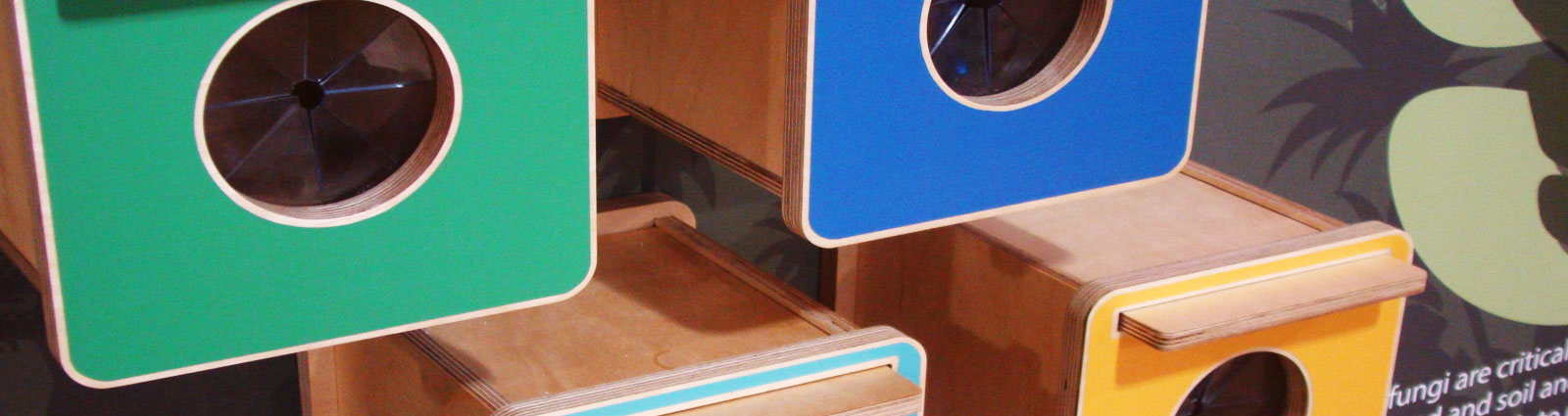
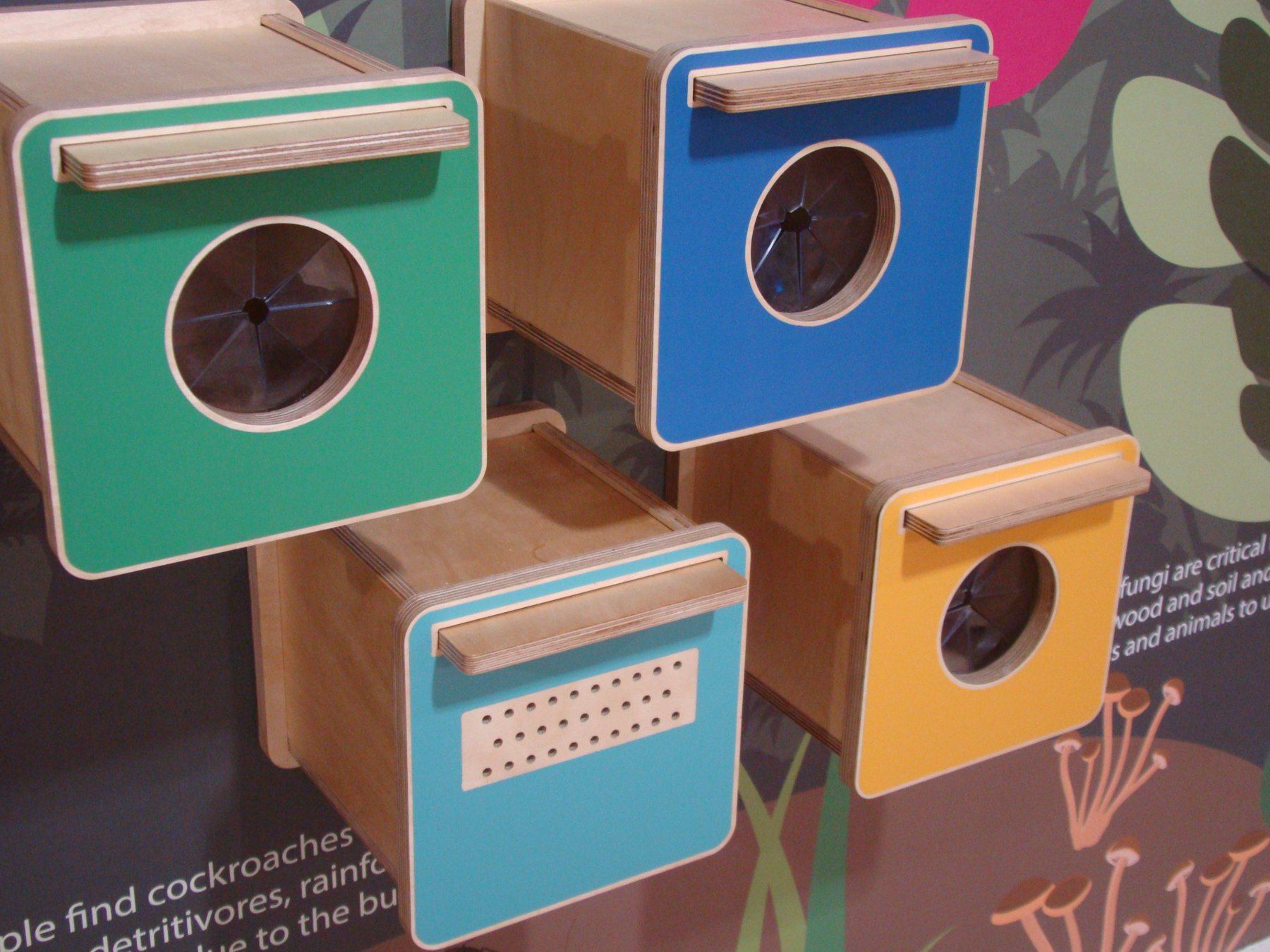
Colourful touch-and-feel boxes arranged at different heights. These tactile museum interactives invite visitors to investigate concealed objects, with mounting positions chosen to suit the surrounding interpretation display.
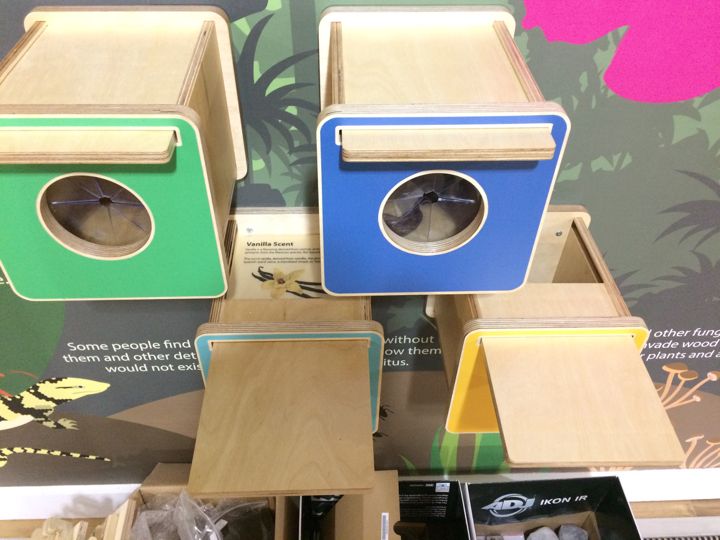
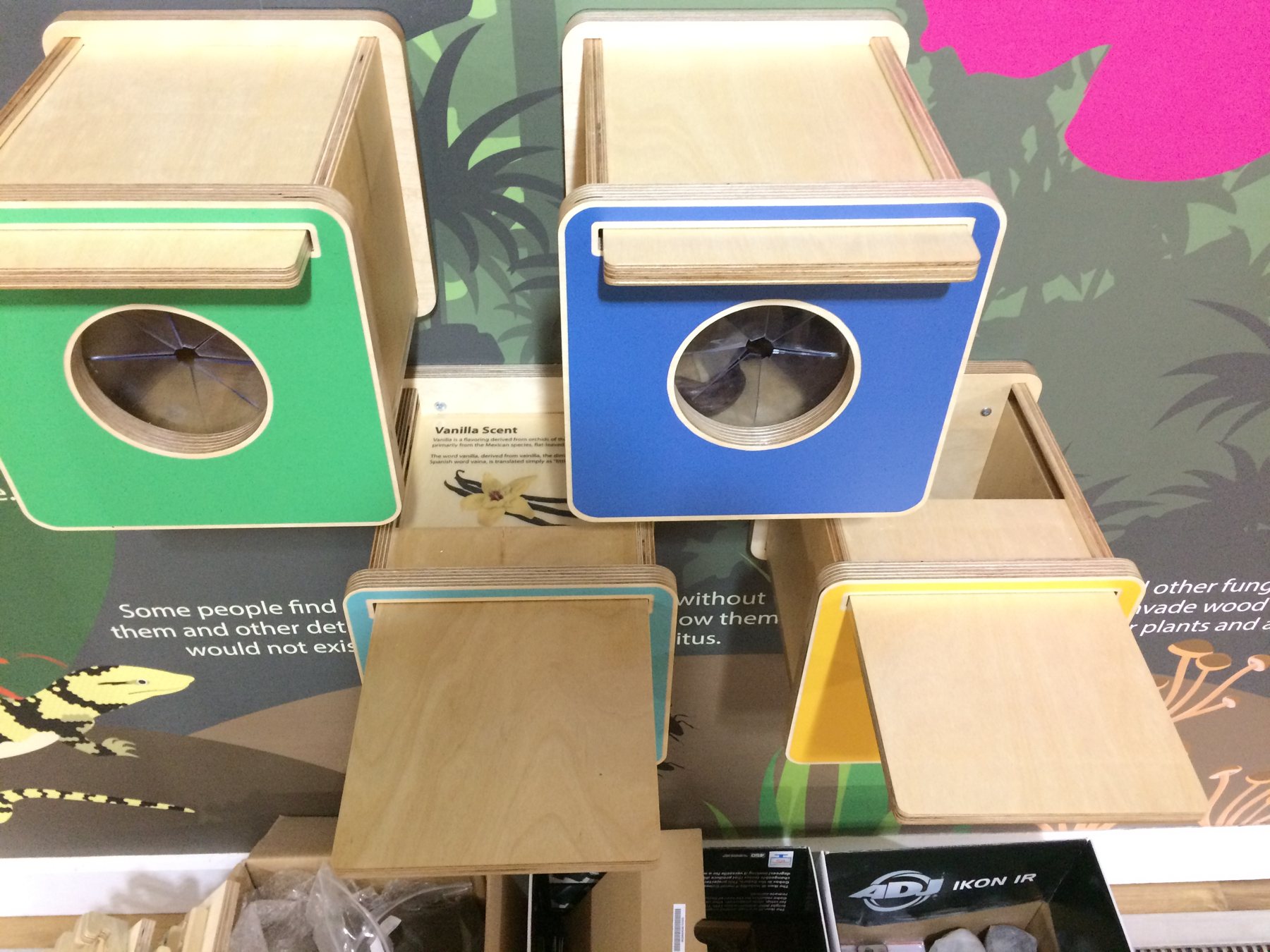
A sliding top opened to reveal the contents. The sliding reveal lets visitors compare what they felt with the object and its description, connecting sensory discovery with a clear learning moment.
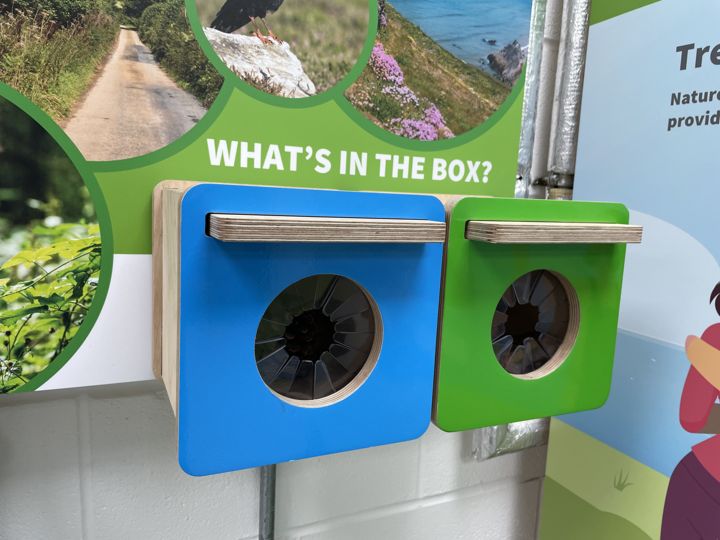
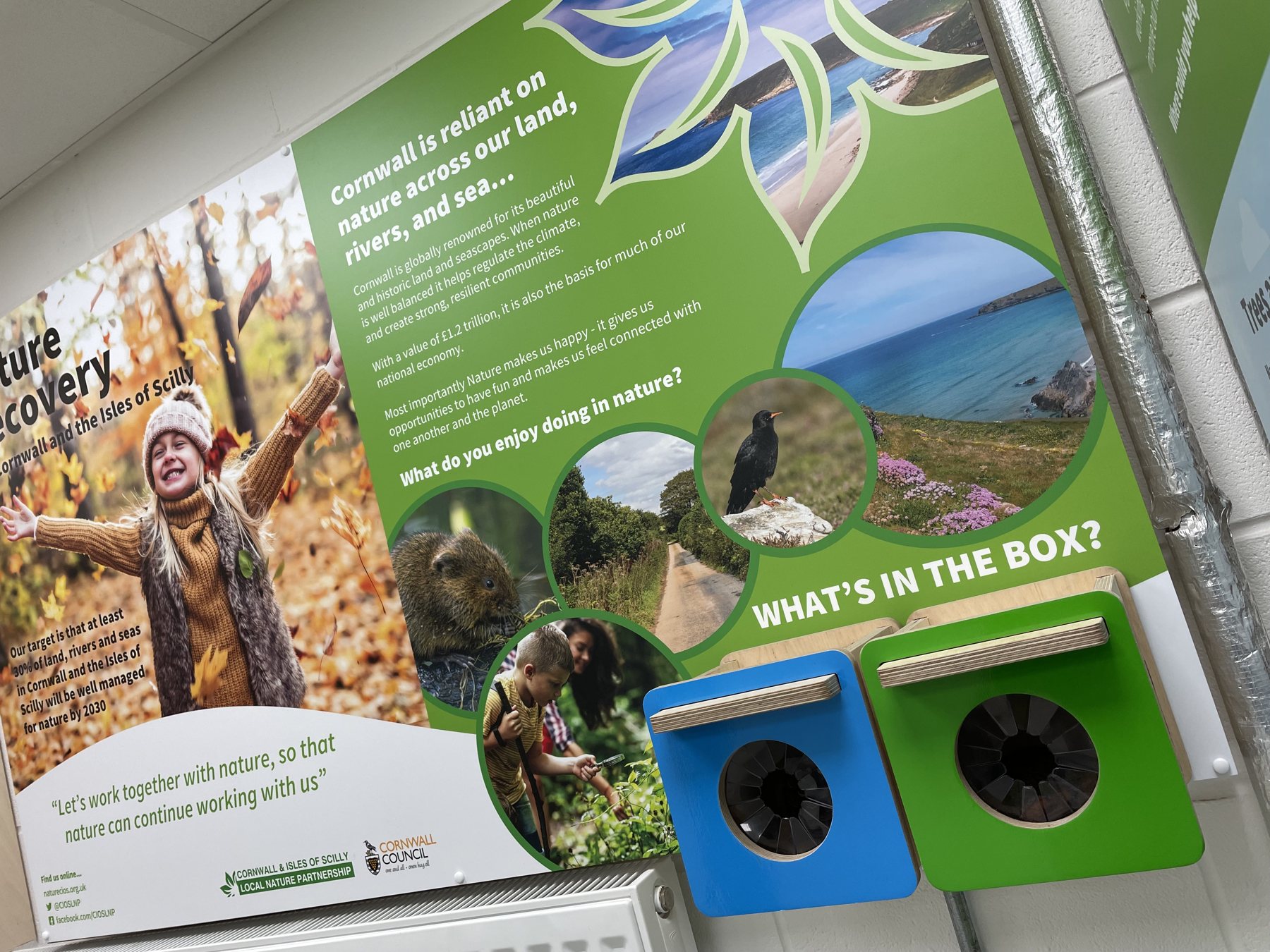
Two tactile boxes within a nature interpretation wall. The boxes become part of the nature-themed graphics, giving visitors a hands-on way to explore the subject alongside the written interpretation.
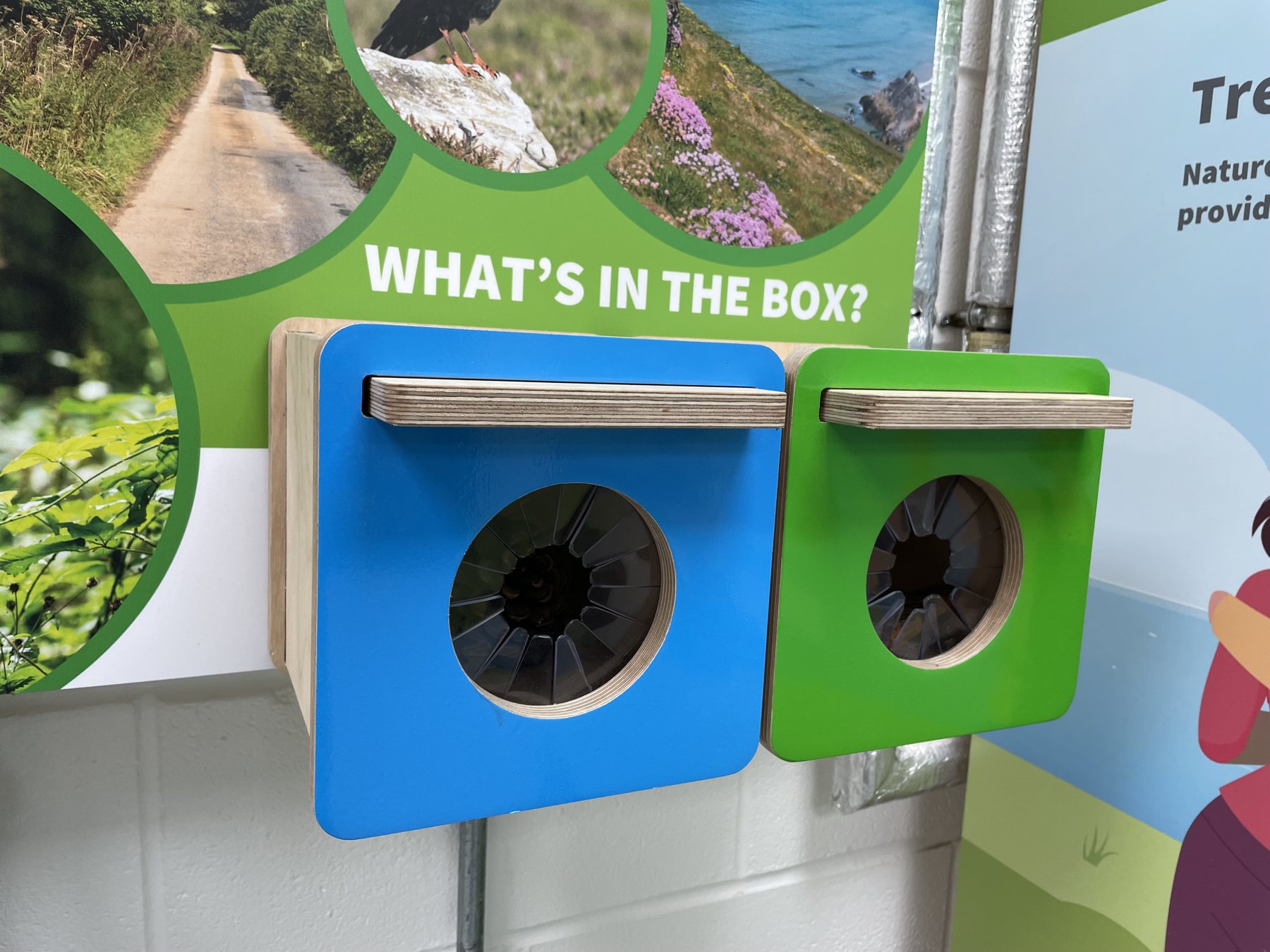
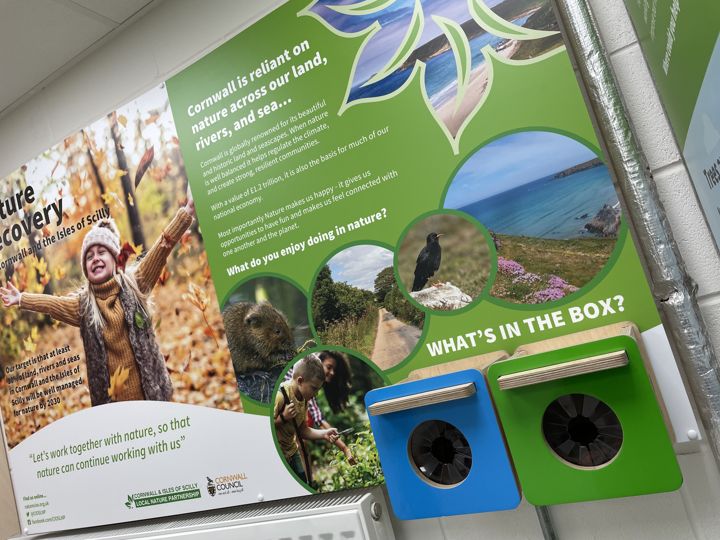
The boxes shown alongside their surrounding interpretation graphics. Custom fronts and coordinated graphics bring each sensory activity into the wider museum wall, with the selected contents shaping the visitor’s discovery.
Back to Interactives
Develop the right interactive approach for you...
We begin with your story, audience, space and objectives. You don’t need to arrive with a finished brief. We test mechanisms, controls and user interactions and deliver the completed experience.