Build, Test & Race
Build & Race Car Track
Build a model car, send it down the track and try a different design. Created for Cambridge Science Centre, this interactive lets visitors explore how weight, wheel size and aerodynamics affect a race.
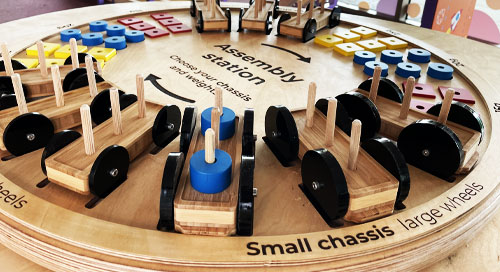
Visitors assemble their cars from the supplied components before racing against another design. Changing the parts gives them a reason to repeat the experiment: a different set of wheels or a revised weight distribution may change what happens on the next run.
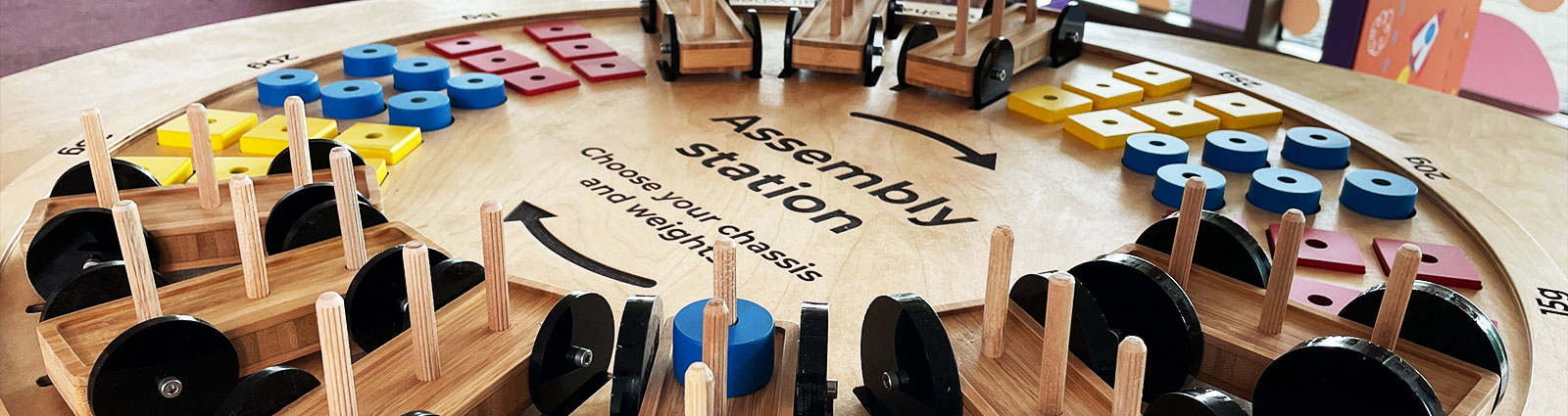
The circular building station keeps the components within reach and provides a shared space for making and comparing cars. Bespoke track construction and printed interpretation bring the activity together as a science centre exhibit based on testing, observing and trying again.
Explore the interactive
The car-building activity gives a science lesson a practical starting point: make a prediction, build a design and compare the result. Because visitors can change individual components, the next race becomes a new question rather than a repeat of the same demonstration. The shared worktop also lets families and groups compare their approaches, making this bespoke science centre interactive as much about discussion and observation as reaching the finish line.
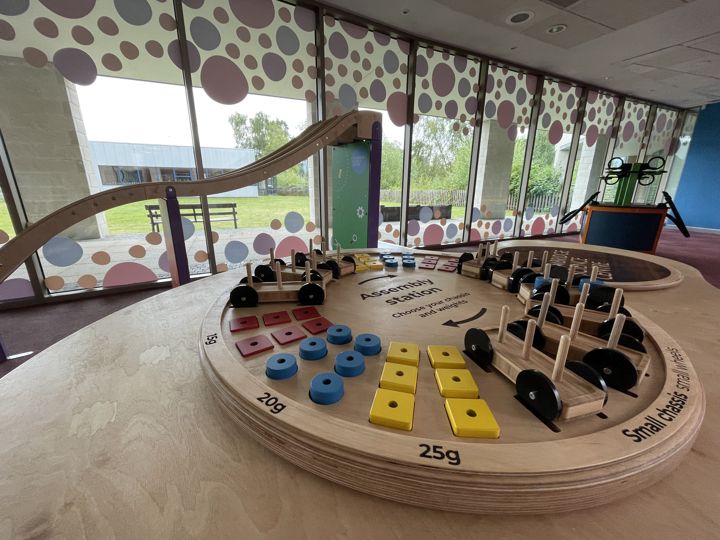
The completed car-building station and race track. Designed for Cambridge Science Centre, this hands-on engineering exhibit combines a shared construction area with a track for testing each model car.
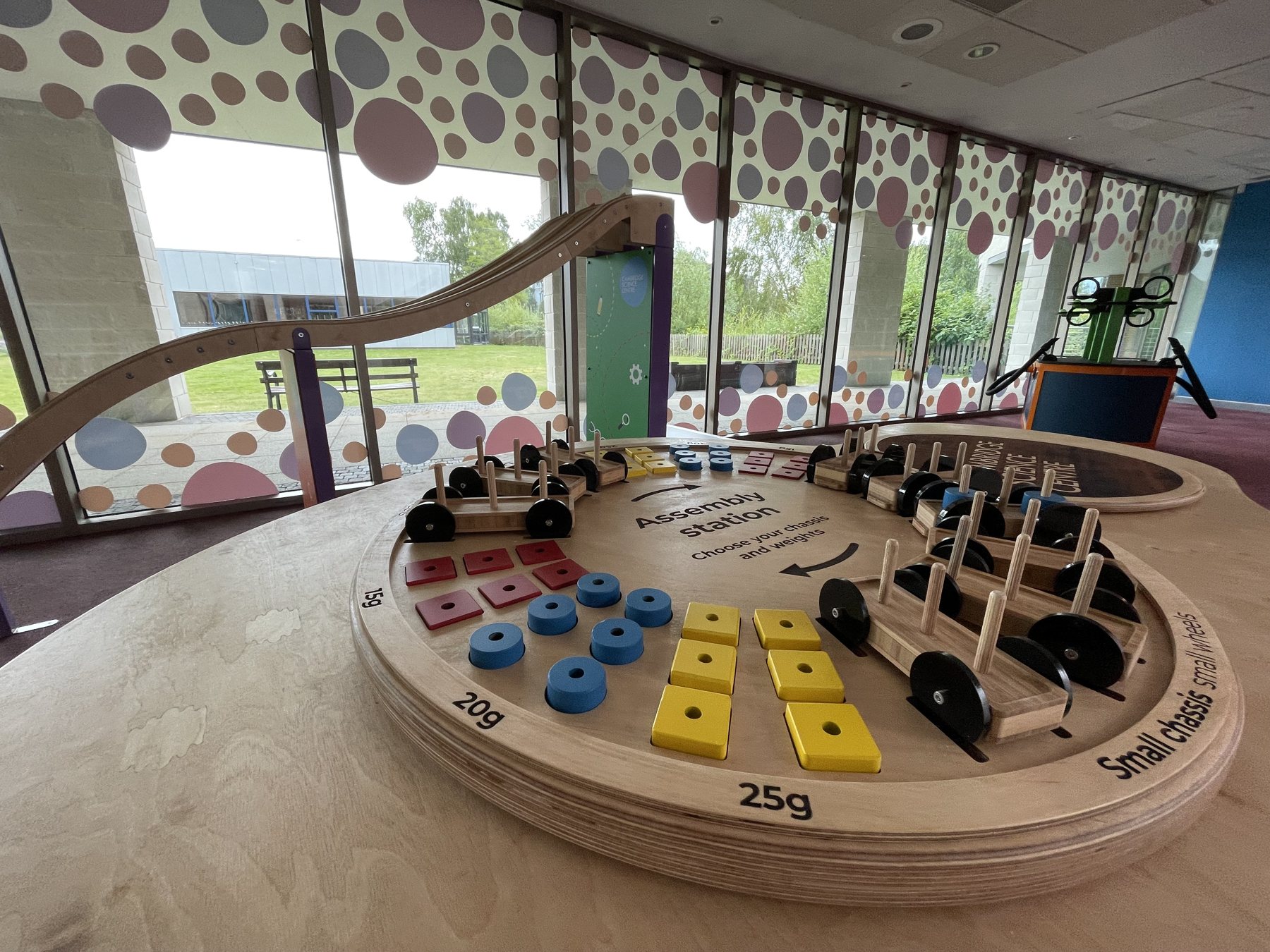
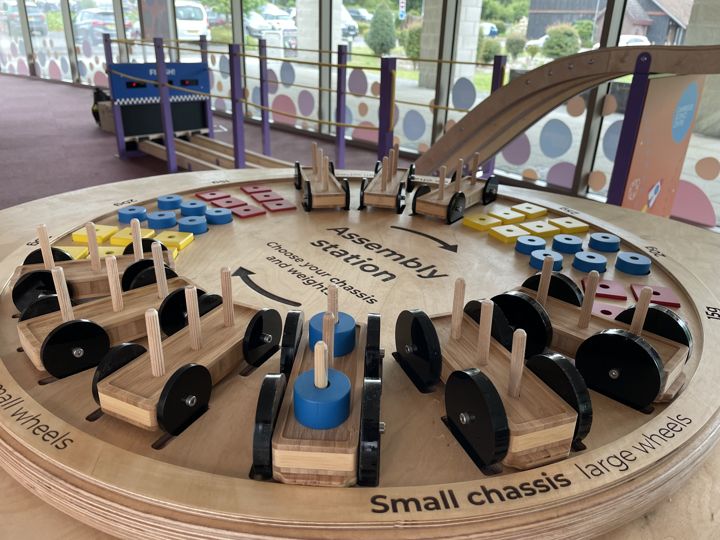
Model cars and components arranged around the circular worktop. The circular building area invites visitors to compare wheel choices and weight distribution as they explore the science behind vehicle design.
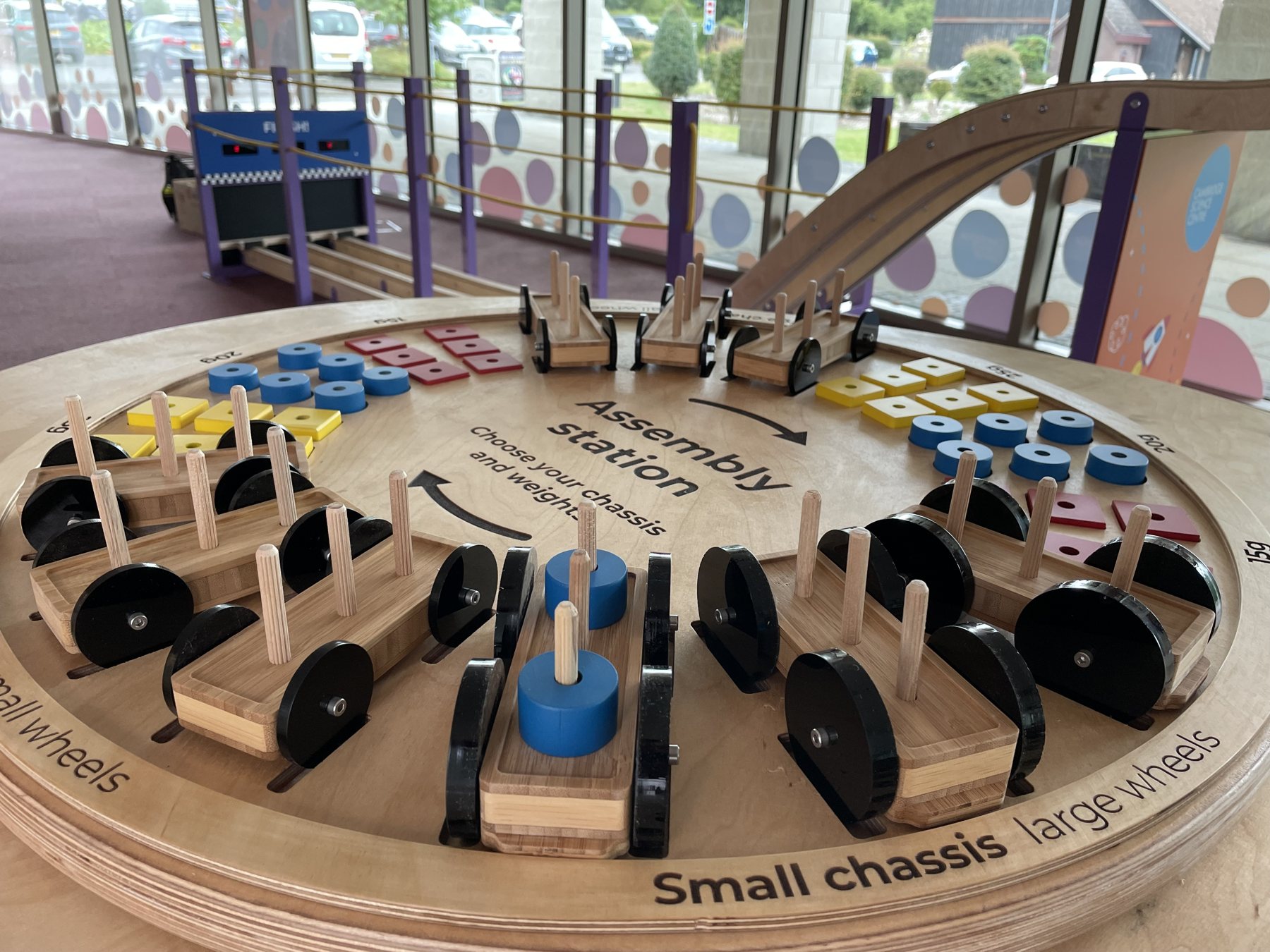
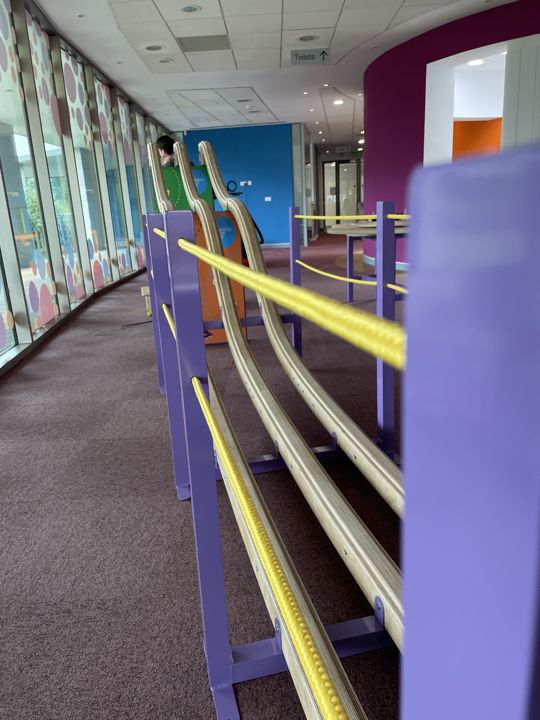
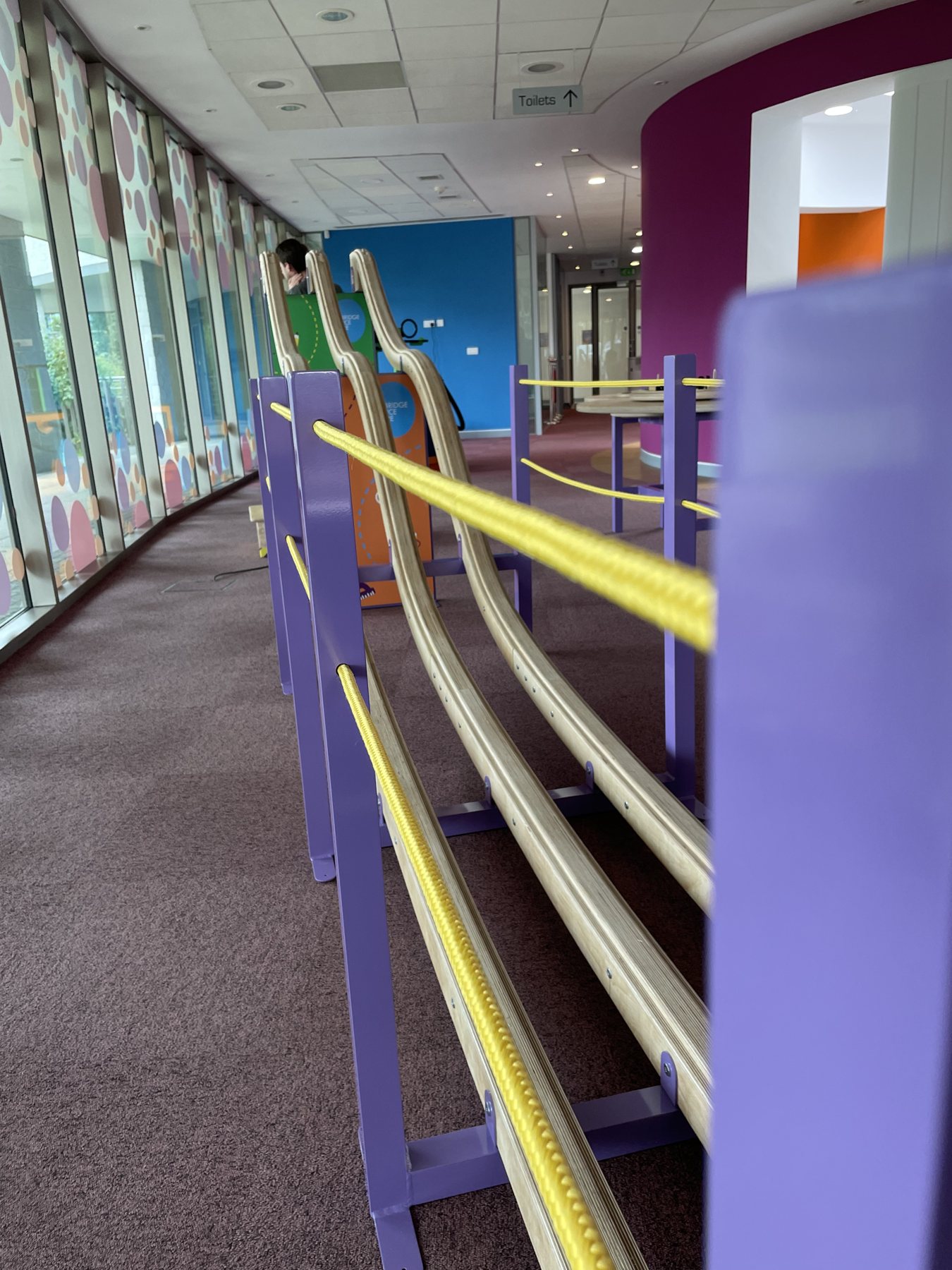
Parallel lanes on the finished race track. Side-by-side racing gives families and groups a direct way to compare their designs, turning a science centre activity into a repeatable experiment.
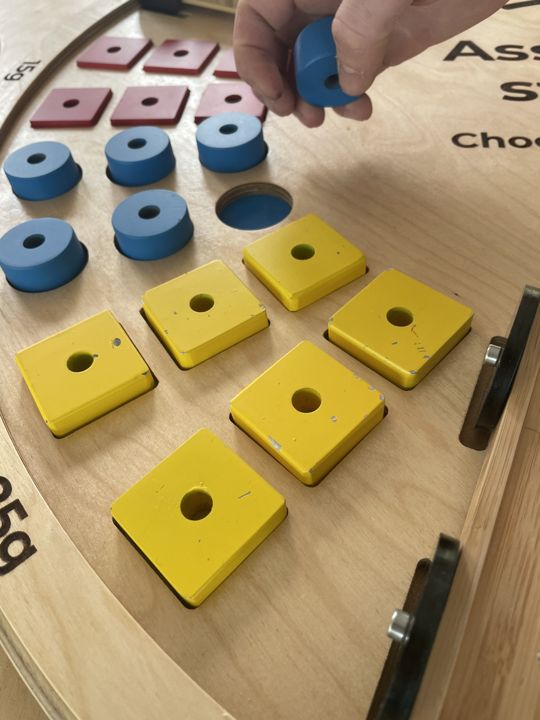
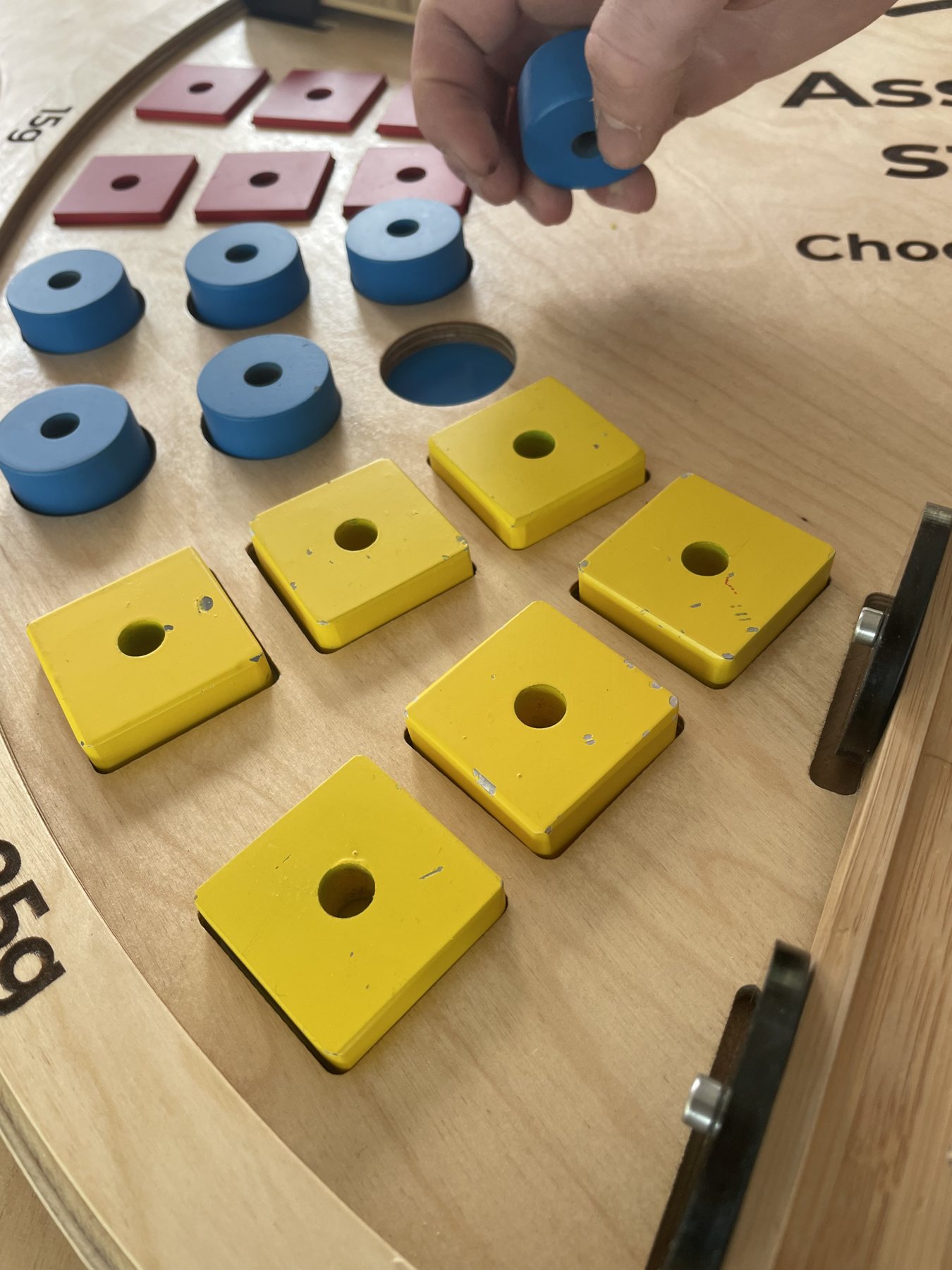
Interchangeable components used to build and modify a model car. Swapping individual parts encourages visitors to make predictions and test them, linking practical model making with observation and problem solving.
Back to Interactives
Develop the right interactive approach for you...
We begin with your story, audience, space and objectives. You don’t need to arrive with a finished brief. We test mechanisms, controls and user interactions and deliver the completed experience.