Explore Engineering Equations
Engineering Equations Interactive
Rotate the triangular unit to illuminate an equation and discover where it is used. This bench-top exhibit connects engineering relationships with examples from the real world.
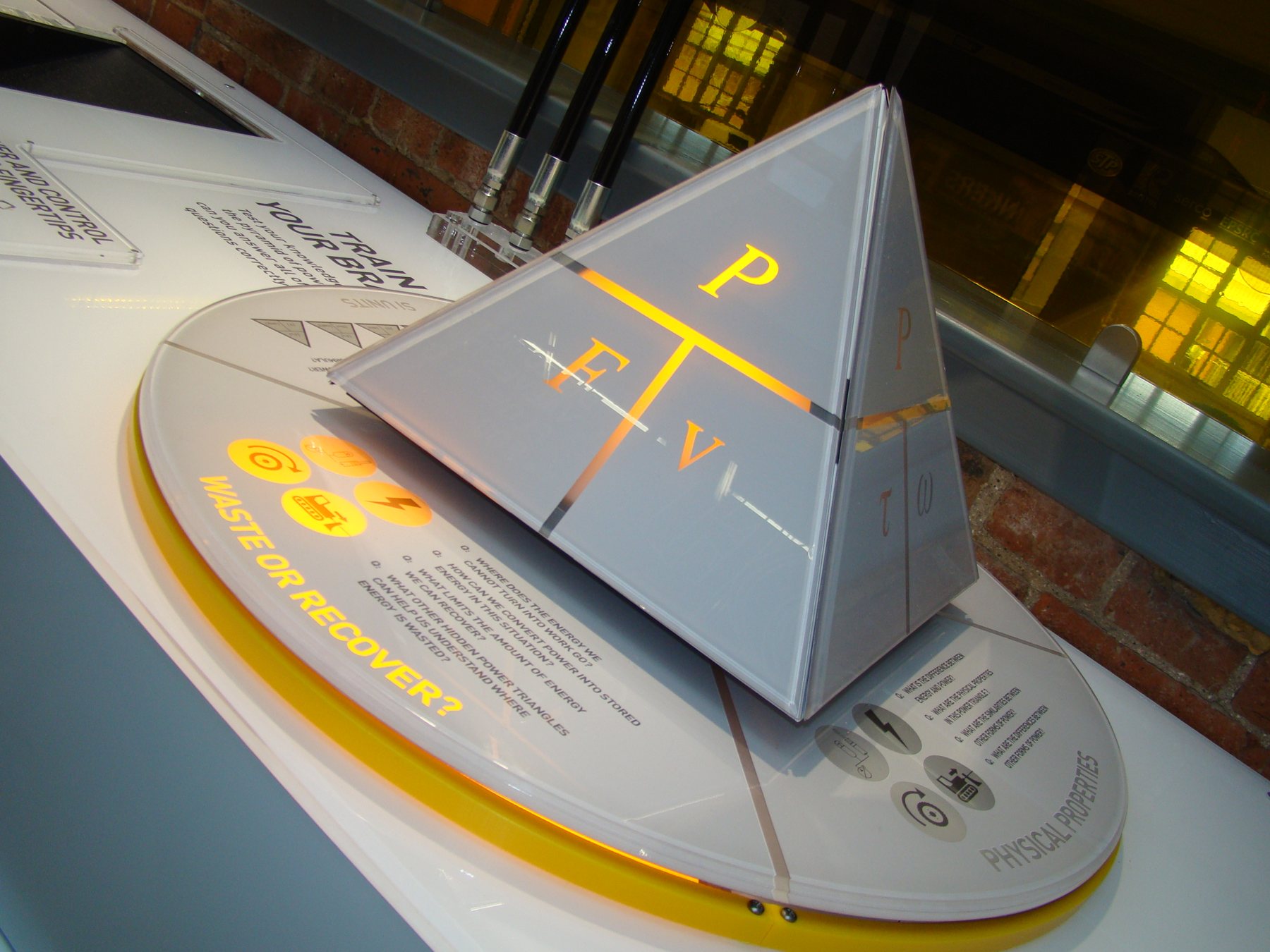
Turning the triangle selects the forward-facing equation. Illumination draws attention to that relationship and highlights the applications shown around the base, linking an abstract formula to a recognisable engineering situation.
The rotating form gives visitors a direct way to move between the examples. Printed interpretation, shaped components and integrated lighting work together in a compact science and engineering demonstration.
Explore the interactive
Rotating the triangular form lets visitors choose which equation to investigate. The illuminated face then connects that selection with examples around the base, helping move the explanation from a formula towards an application. This compact display brings mechanical interaction, lighting and graphics together to create a physical reference point for science and engineering interpretation.
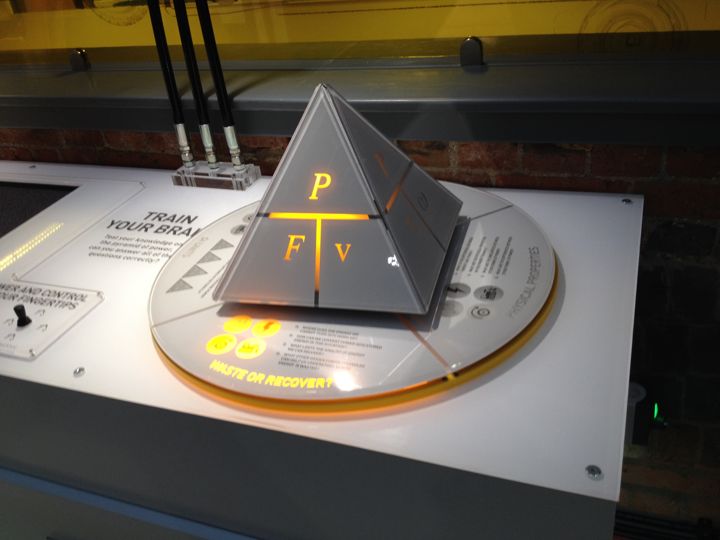
The complete rotating engineering-equations exhibit. The bench-top science exhibit turns abstract engineering relationships into a physical activity, with a rotating display and illuminated examples.
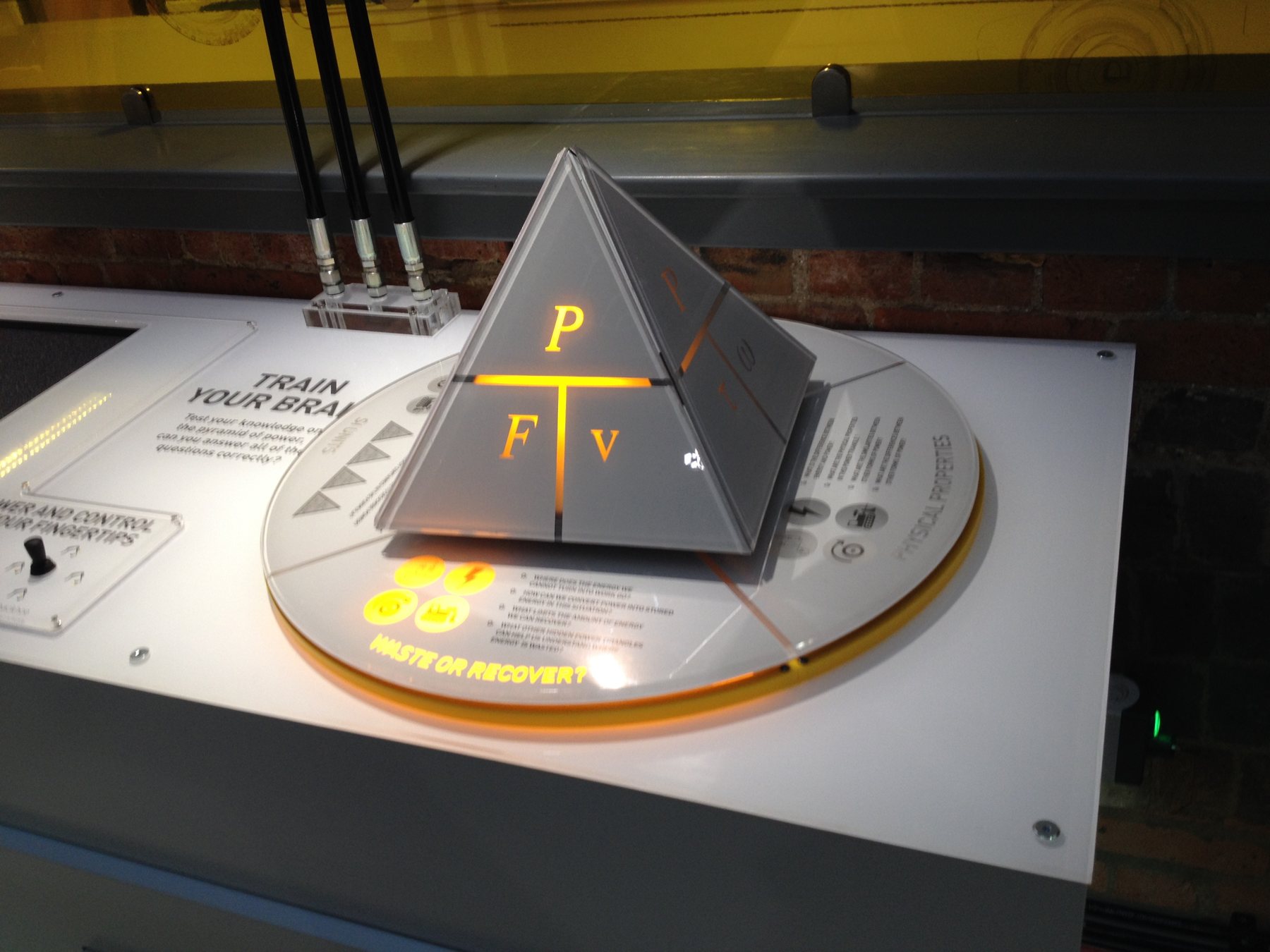
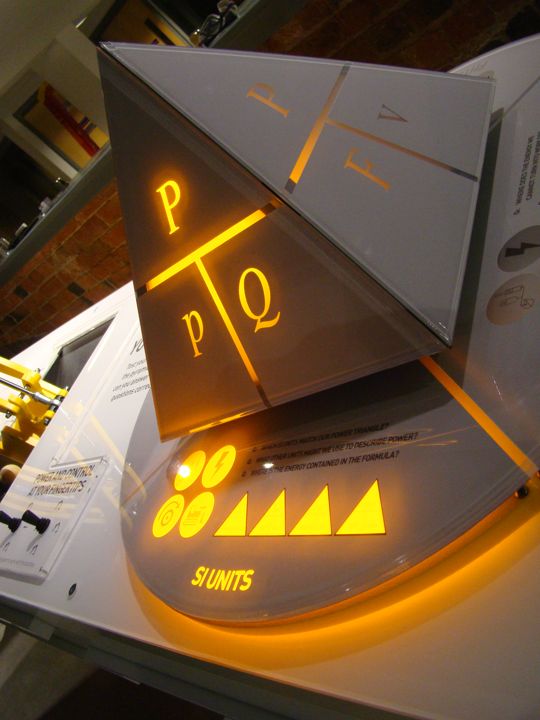
An illuminated equation on the triangular unit. Lighting draws attention to the selected formula, encouraging visitors to connect the equation with the real-world applications described below.
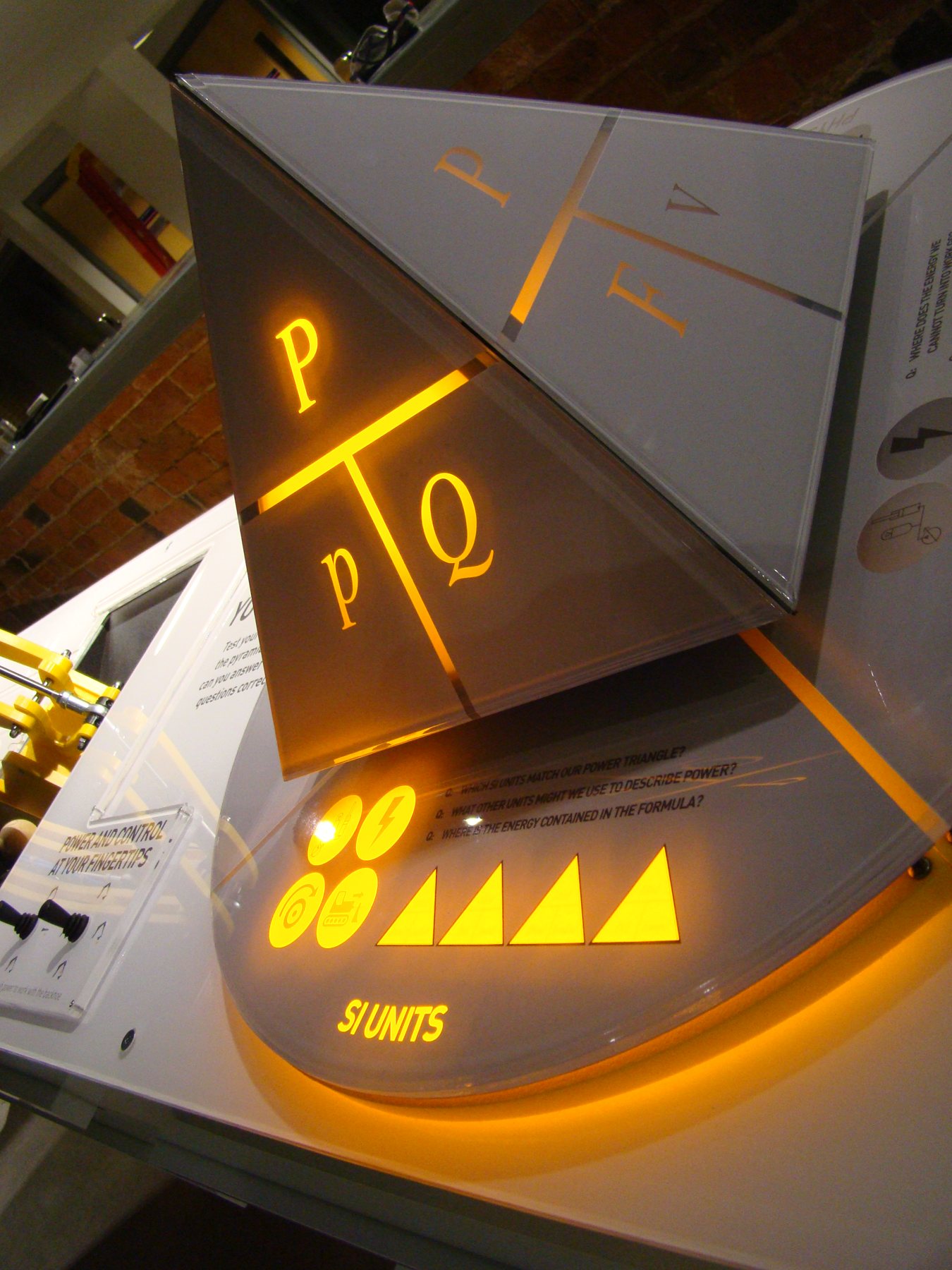
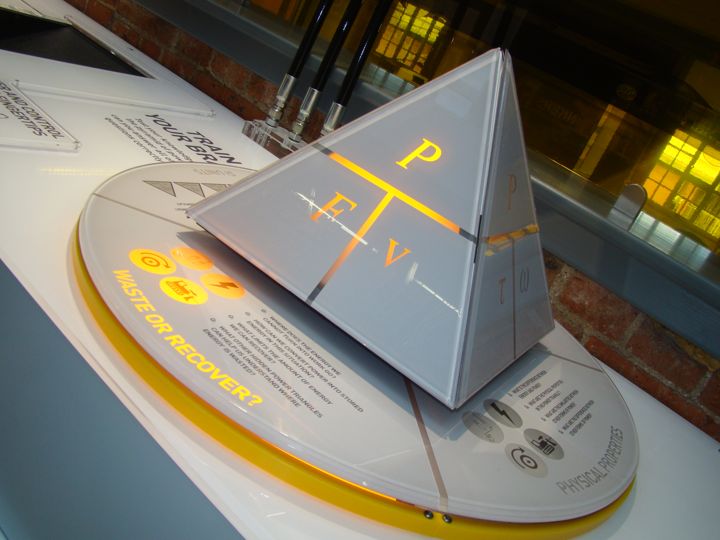
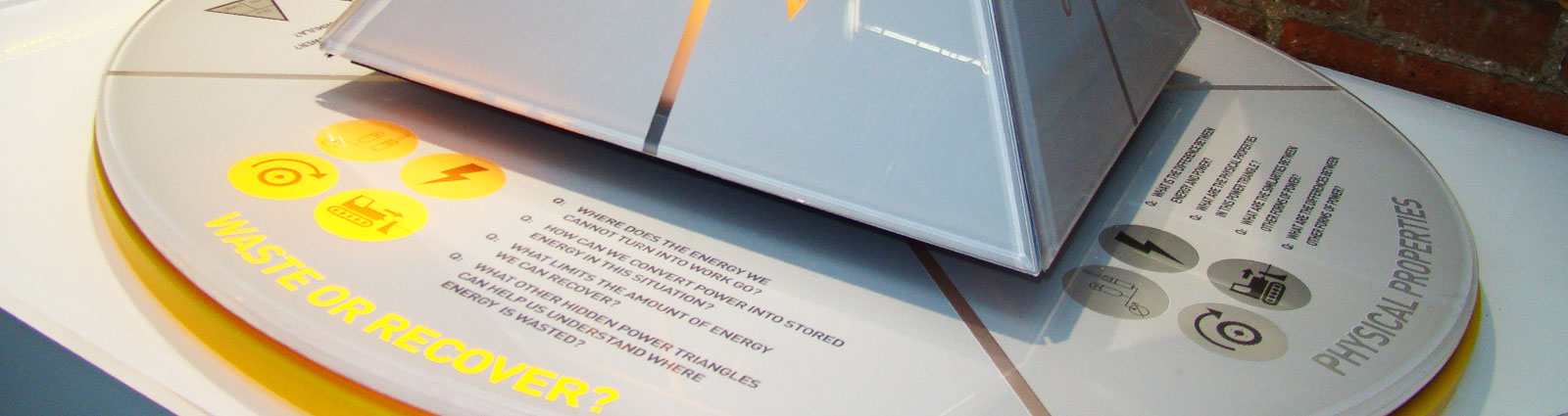
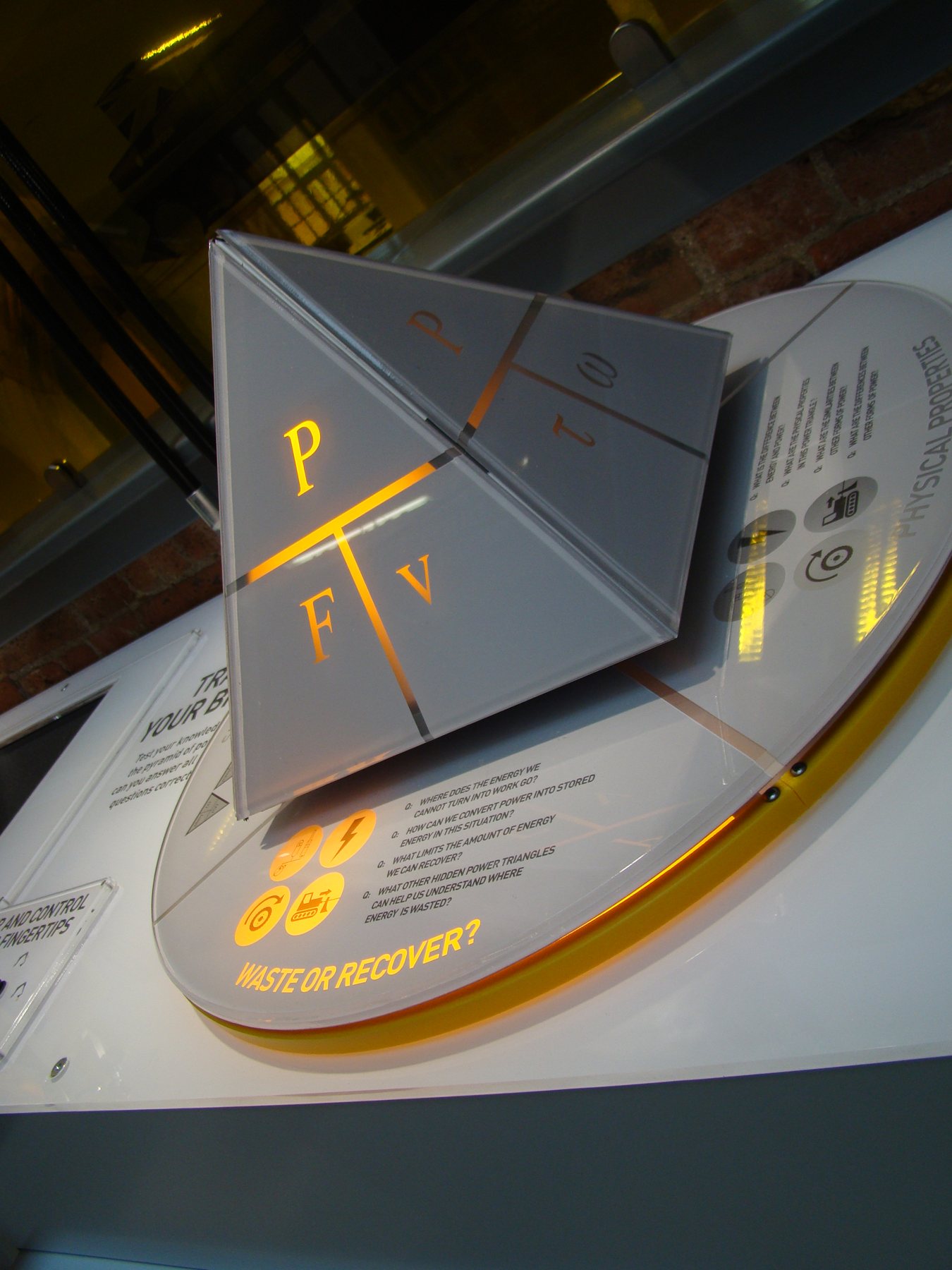
The rotating unit and interpretation around its base. The turning action and printed base work together as one interpretation system, linking each selection with a recognisable engineering context.
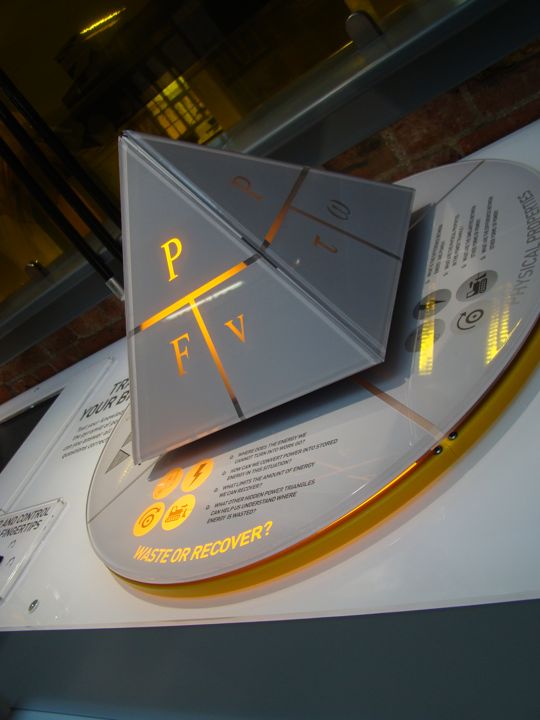
Another equation face selected on the display. Visitors can move between the faces to compare relationships, giving the compact educational display a repeatable sequence of discoveries.
Back to Interactives
Develop the right interactive approach for you...
We begin with your story, audience, space and objectives. You don’t need to arrive with a finished brief. We test mechanisms, controls and user interactions and deliver the completed experience.